
By [visittaxi.com] — Amritsar’s Premier Cab & Tour Service
“Not every city tells you a story the moment you arrive. Amritsar does.” — Every traveller who has ever set foot here.
Welcome to Amritsar — Where Every Street Has a Soul
If there is one city in India that hits you before you even reach it — in the way the air smells of langar smoke, marigolds, and distant kirtan — it is Amritsar. We have driven thousands of visitors through these streets, from the quiet pre-dawn pilgrim rush to the flag-lowering thunder at Wagah Border. And every single time, without exception, we watch our passengers fall in love with this city.
Whether you are arriving by flight at Sri Guru Ram Dass Jee International Airport, rolling in on the Shatabdi Express, or road-tripping from Delhi or Chandigarh — we are here, ready to take you on the most memorable ride of your life through the Golden City of Punjab.
This guide is your all-in-one companion for planning a trip to Amritsar: history, must-visit places, local food, travel tips, and how to get around — all from the people who know these roads better than anyone.
The History of Amritsar: A City Built on Faith and Resilience
How Amritsar Was Born
The name Amritsar is no accident. It is a Sanskrit compound of two profound words — Amrit (the nectar of immortality) and Sar or Sarovar (a pool or lake). Together, they mean “The Pool of Nectar” — and that is exactly what this city is built around.
Before 1574, this entire region was a dense forest dotted with small natural lakes. It was Guru Amar Das Ji, the third Guru of Sikhism, who first saw the divine potential of this land. He chose it as a sacred settlement for the Sikh community and asked his devoted disciple, Guru Ram Das Ji (the fourth Sikh Guru), to begin its development.
In 1577, Guru Ram Das Ji excavated the holy tank that would eventually give the city its name — the Amrit Sarovar. He established a spiritual center there, and people began calling the settlement Ramdaspur after their beloved Guru. Over time, the name evolved into Amritsar, and a city was born.
The Golden Temple: Foundation of a Civilization
The construction of Sri Harmandir Sahib — known worldwide as the Golden Temple — began in 1588 under Guru Arjan Dev Ji, the fifth Sikh Guru. In a remarkable gesture of interfaith harmony, the foundation stone was laid by Hazrat Mian Mir, a revered Muslim saint from Lahore. This single act speaks volumes about the inclusive philosophy at the heart of Amritsar.
The temple was built lower than the surrounding land — a deliberate architectural choice symbolizing humility and equality. Its four entrances, opening to all four directions, was an open invitation to people of every religion, caste, and creed. The Guru Granth Sahib (the holy scripture of Sikhism) was installed inside in 1604, with Baba Budha Ji becoming the shrine’s first Granthi (head priest).
The gold-covered exterior that gives the Golden Temple its globally recognized name came much later. Maharaja Ranjit Singh, the legendary “Lion of Punjab,” adorned the upper half of the temple with approximately 400 kg of pure gold leaf in the early 19th century — a gift of devotion that still dazzles every soul who sets eyes on it.
Centuries of Struggle and Survival
Amritsar’s history is not written only in gold — it is also written in courage. The city endured repeated attacks from Mughal rulers and Afghan invaders through the 17th and 18th centuries. The Golden Temple itself was targeted multiple times, desecrated, and destroyed — and each time, the Sikh community rebuilt it with greater resolve and grandeur.
In 1919, the city witnessed one of the darkest chapters of India’s colonial history: the Jallianwala Bagh Massacre, where British General Reginald Dyer ordered troops to open fire on a peaceful public gathering, killing hundreds. The wound of that day is still visible in the bullet-marked walls of the garden.
In 1984, the complex became the site of Operation Bluestar, a military operation ordered by then Prime Minister Indira Gandhi, adding another layer of sorrow to its history. Yet Amritsar — like the Sikhs themselves — has always risen again.
Today, Amritsar stands as one of India’s most visited cities, a living monument to faith, resilience, and the timeless power of community.
Top Places to Visit in Amritsar (With Taxi Routes & Tips)
As your trusted Amritsar taxi service, we’ve curated the essential stops. Here’s what you must not miss:
1. Sri Harmandir Sahib — The Golden Temple
Golden Temple Road, Amritsar
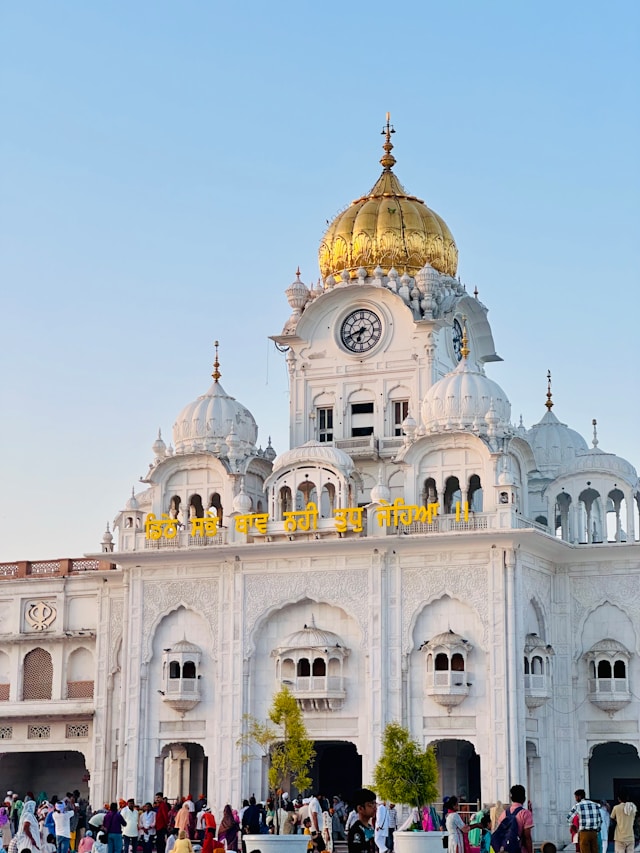
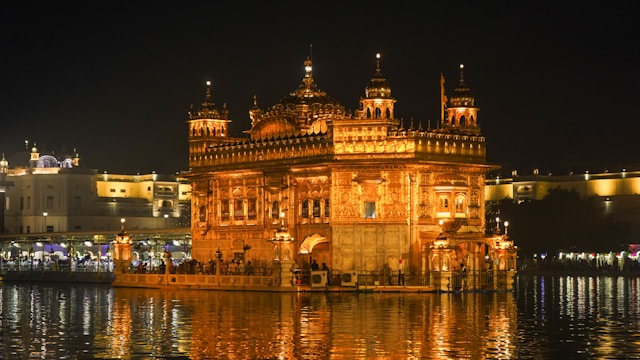
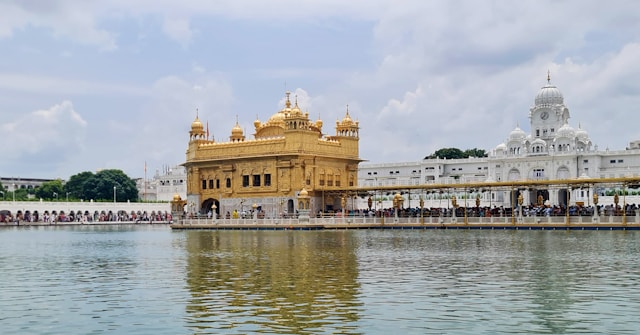
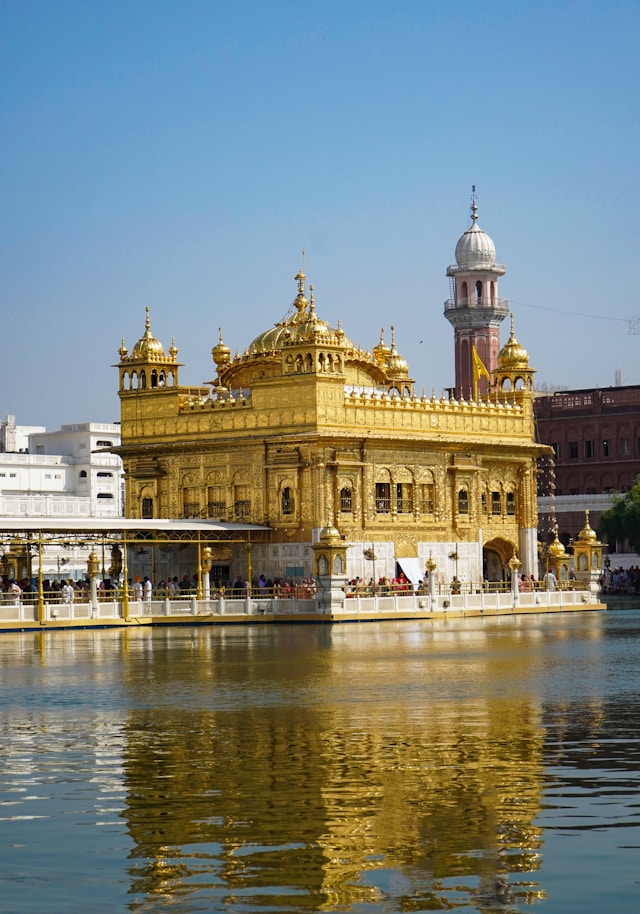
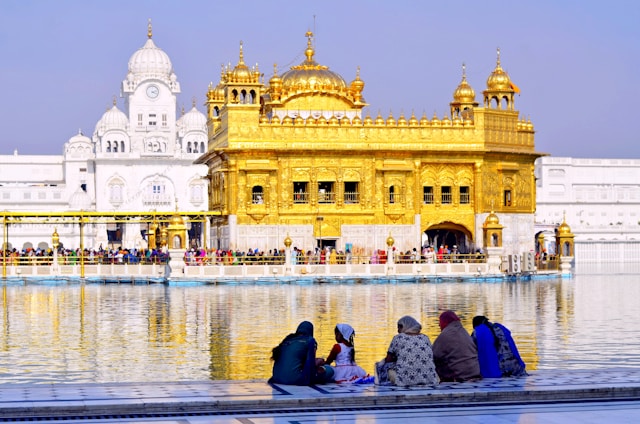
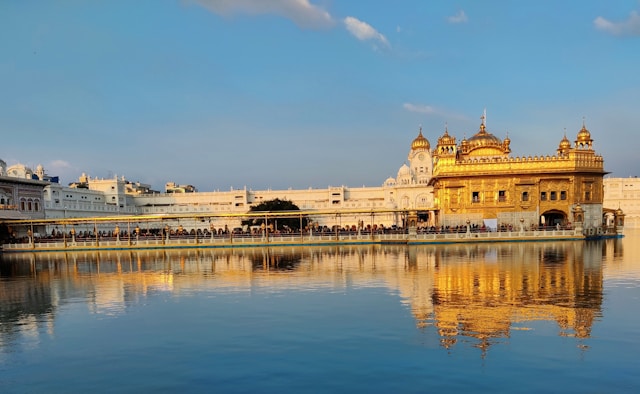
No introduction needed. The Golden Temple is not just a religious monument — it is an experience that rewires something deep inside you. The moment you step through the main entrance, wash your feet in the holy water channel, and catch your first glimpse of the golden dome shimmering over the still waters of the Amrit Sarovar — time stops.
What to do here:
Walk the parikrama (circumambulation path) around the sacred pool
Attend the spellbinding Palki Sahib ceremony — when the Guru Granth Sahib is carried in a flower-decorated palanquin
Experience the Guru Ka Langar — one of the world’s largest community kitchens, serving free meals to over 50,000–1,00,000 people every single day
Visit the Akal Takht, the highest temporal seat of Sikh authority
Explore the Central Sikh Museum inside the complex
Best Time to Visit: Early morning during Amrit Vela (4–6 AM) for peace and reflection. Evening (post-7 PM) for the breathtaking golden glow of the lit-up temple reflected in the Sarovar.
Our Taxi Tip: We recommend dropping you at the nearest parking and walking the final stretch through the old lanes of Katra Ahluwalia — the bazaar atmosphere before the temple is part of the experience.
2. Jallianwala Bagh — Where History Weeps
Near Golden Temple, Amritsar
Just a short walk from the Golden Temple lies Jallianwala Bagh — a public garden that carries the weight of one of history’s greatest tragedies. On April 13, 1919 — Baisakhi Day — British General Dyer ordered his troops to fire upon a peaceful gathering of thousands of men, women, and children. The death toll was catastrophic.
Today, you can still see the bullet holes in the walls — preserved as a haunting memorial. The Martyrs’ Well, into which many jumped to escape the bullets, stands as a silent testament. A flame burns perpetually at the memorial, never to be extinguished.
This is not merely a tourist stop — it is a pilgrimage for every Indian who values freedom.
Our Taxi Tip: We can arrange combined Golden Temple + Jallianwala Bagh half-day tours at very affordable rates. Most visitors prefer visiting these two together.
3. Wagah Border — India’s Most Electrifying Daily Show
40 km from Amritsar city, on the India-Pakistan border
Every evening at sunset, something extraordinary happens at Wagah Border. The Beating Retreat Ceremony — a synchronized, high-stepping military pageant performed jointly by Indian BSF soldiers and Pakistani Rangers — draws thousands of spectators on both sides. The atmosphere is electric: crowds chanting, flags waving, boots thundering against the ground.
It is simultaneously a patriotic spectacle and a deeply moving reminder of a divided land.
Timings: The ceremony is held daily, roughly 45 minutes before sunset (time varies by season).
Our Taxi Tip: Book our Wagah Border Evening Tour — we pick you up from your hotel, take you to the border with plenty of time to secure good seating, and bring you back safely after the ceremony. Given the distance and limited parking, having your own cab is the smartest way to make this trip.
4. Durgiana Temple — The Hindu Golden Temple
Durgiana Temple Road, Amritsar
Often called the Silver Temple or the Hindu Golden Temple, the Durgiana Mandir was constructed in the 1920s by Pandit Madan Mohan Malviya. Its architecture deliberately mirrors that of the Golden Temple — a central shrine rising from the middle of a large water tank, with a golden-domed structure connected by a causeway.
Dedicated to Goddess Durga (and also housing shrines to Lord Vishnu and Lakshmi), this temple is a significant pilgrimage destination for Hindus and a visually stunning landmark for all visitors.
Our Taxi Tip: Easily combined with a Golden Temple visit — only 15 minutes away by cab.
5. Partition Museum
Town Hall, Amritsar
One of the most important museums in South Asia, the Partition Museum tells the story of the 1947 Partition of India — one of the largest forced migrations in human history, which displaced over 14 million people and changed the map of the subcontinent forever. Many of those displaced had deep roots in Punjab — and this city felt the pain more than almost any other.
Through photographs, personal testimonies, artefacts, and interactive exhibits, the museum brings both grief and hope to those who walk through its galleries.
Our Taxi Tip: Allow at least 2–3 hours here. It is not a quick visit — it is a conversation with history.
6. Ram Bagh (Company Bagh) & Maharaja Ranjit Singh Museum
Mall Road, Amritsar
The summer palace of Maharaja Ranjit Singh — the legendary founder of the Sikh Empire — now houses a fascinating museum with an impressive collection of weapons, armory, paintings, and royal artefacts from the Sikh Empire era. The surrounding gardens, known as Ram Bagh, are a peaceful green escape in the heart of the city.
7. Gobindgarh Fort — The Fort That Guarded Punjab
Near Lawrence Road, Amritsar
The Gobindgarh Fort was the military stronghold of Maharaja Ranjit Singh’s empire. Today, it has been beautifully restored as an experiential heritage complex, offering sound-and-light shows, folk performances, historical exhibits, and street food stalls. An evening visit here feels like stepping back into 18th-century Punjab.
Our Taxi Tip: Ideal for families and groups — our cabs accommodate up to 7 passengers, making group travel comfortable and economical.
8. Khalsa College — An Architectural Masterpiece
Grand Trunk Road, Amritsar
Even if you are not an architecture enthusiast, Khalsa College will stop you in your tracks. Founded in 1892, this historic institution features stunning Indo-Saracenic architecture — a blend of Mughal, Rajput, and European styles that makes it one of the most photographed campuses in North India. Our drivers are happy to pause here for photographs en route.
Amritsar Food Guide: Eat Your Way Through the Golden City
No trip to Amritsar is complete without surrendering completely to its legendary food culture. Amritsari cuisine is bold, generous, and utterly unforgettable.
Must-Try Dishes:
Amritsari Kulcha — The city’s most beloved dish. Crispy, oven-baked bread stuffed with spiced potato or paneer, served with chana masala, pickle, and white butter. Head to Kulcha Land or Bhai Kulwant Singh Kulcha for the authentic experience.
Amritsari Macchi (Fish) — Crispy fried fish coated in a tangy gram-flour batter. A street food legend.
Dal Makhani — Slow-cooked black lentils simmered overnight with butter and cream. The original Punjabi comfort food.
Lassi — Thick, creamy, and poured in enormous clay pots. Try it at Gian di Lassi near the Golden Temple.
Paye (Trotters Curry) — A rich, collagen-heavy slow-cooked stew. A breakfast dish for the brave.
Phirni and Pinni — Classic Punjabi sweets to end your meal.
Our Taxi Tip: Ask your driver — our team will happily recommend the best dhabas and restaurants based on your taste and budget. We know which stalls have been serving since 1950 and which new places are worth a try.
Best Time to Visit Amritsar
| Season | Months | Experience |
| Winter (Best) | October – March | Cool, pleasant; perfect for sightseeing; Golden Temple at Diwali is magical |
| Spring | February – April | Mild weather; Baisakhi (April 13–14) is a spectacular festival |
| Monsoon | July – September | Lush greenery; occasional rain; fewer tourists |
| Summer (Avoid) | May – June | Extremely hot (40°C+); not ideal for outdoor sightseeing |
Key Festivals to Plan Around:
Baisakhi (April 13) — The Sikh New Year; Amritsar erupts in colour, music, and devotion
Guru Nanak Jayanti (October/November) — The Golden Temple glows all night during this birth anniversary of the first Sikh Guru
Diwali — The Golden Temple is illuminated with thousands of lamps — a sight you will never forget
How to Get Around Amritsar: Why a Taxi is Your Best Friend
Amritsar’s old city streets are narrow, busy, and beautifully chaotic. While auto-rickshaws and e-rickshaws are everywhere, they are not always the most convenient for:
Long-distance trips (e.g., Wagah Border is 30 km away)
Families or groups with luggage
Airport and railway station transfers
Multi-destination day tours
Late-night or early-morning travel (Golden Temple at 4 AM is best reached by private cab)
Why Choose [visittaxi.com]?
Airport Transfers — Sri Guru Ram Dass Jee International Airport pickups and drops, 24/7 Railway Station Transfers — Amritsar Junction and all nearby stations
City Sightseeing Tours — Half-day and full-day customized packages
Wagah Border Evening Tour — Our most popular package
Outstation Trips — Delhi (450 km), Chandigarh (220 km), Pathankot (115 km), Dharamshala (200 km), Jammu (200 km)
Clean, AC Vehicles — Sedans, SUVs, and Tempo Travellers available
Experienced Local Drivers — Fluent in Hindi, Punjabi, and basic English
Fixed, Transparent Pricing — No hidden charges, no surge pricing
Private tour guides are also available.
Book Now: [+91 9855277372] Email: tourguide008@gmail.com
Practical Travel Information for Amritsar Visitors
How to Reach Amritsar:
By Air: Sri Guru Ram Dass Jee International Airport has direct flights from Delhi, Mumbai, Bangalore, and several international destinations
By Train: Amritsar Junction is well-connected via Shatabdi Express (from Delhi: ~6 hours), Golden Temple Mail, and other major trains
By Road: National Highway 1 (Grand Trunk Road) connects Amritsar to Delhi (450 km), Chandigarh (220 km), and Jalandhar (80 km)
Golden Temple Entry Rules:
Entry is FREE for all
Cover your head (scarves available free at the entrance)
Remove footwear before entering
Wash your feet at the entrance channel
Photography is allowed in the complex but not inside the sanctum sanctorum
Alcohol, tobacco, and non-vegetarian food are strictly prohibited inside
Language: Punjabi is the local language; Hindi is widely understood; basic English works in tourist areas.
Currency: Indian Rupee (INR). ATMs are widely available.
Why Amritsar Belongs on Every Traveler’s Bucket List
Amritsar is one of those rare places that offers something profound to every kind of traveller. The spiritual seeker finds the Golden Temple. The history lover finds Jallianwala Bagh and the Partition Museum. The food lover finds the richest cuisine in Northern India. The adventure seeker finds the adrenaline of Wagah Border. And the curious wanderer finds all of it — wrapped in the warmth of Punjabi hospitality that is, quite simply, unmatched anywhere in the world.
We have had the privilege of being part of thousands of Amritsar journeys. And we can tell you this with certainty: no one ever leaves Amritsar unchanged.
So come. Let the city welcome you — as it has welcomed every soul for over 450 years — with open arms, a bowl of langar, and a view of gold.
Ready to Explore Amritsar? Book Your Taxi Today!
[visittaxi.com] Amritsar, Punjab, India Call or WhatsApp [+91 9855277372]
Please Write to – tourguide008@gmail.com