By VisitTaxi | tourguide008@gmail.com | +91 9855277372
Table of Contents
Triund Trek: The Ultimate Complete Guide to Dharamshala’s Most Iconic Trek.. 1
2. Why Triund Trek is Perfect for Every Traveller. 1
3. Triund Trek Overview & Quick Facts. 1
4. How to Reach Dharamshala & McLeod Ganj 1
5. Triund Trek Route: Step-by-Step. 1
Trailhead: Dharamkot / Gallu Devi Temple (1,457 m). 1
Section 1: Gallu Temple to Magic View Café (~3 km). 1
Section 2: Magic View Café to Triund Top (~6 km). 1
Summit: Triund Top (2,828 m). 1
6. Best Time to Visit Triund Trek. 1
March to June (Peak Season – Spring/Early Summer). 1
July to August (Monsoon Season). 1
September to November (Post-Monsoon – Best Season). 1
December to February (Winter Season). 1
7. Difficulty Level & Fitness Requirements. 1
What a Night at Triund is Like. 1
10. What to Pack for Triund Trek. 1
11. Food & Water on the Trail 1
12. Flora, Fauna & Natural Beauty. 1
13. Snow Line Trek: Beyond Triund. 1
14. Safety Tips & Precautions. 1
15. Where to Stay in McLeod Ganj 1
16. Things to Do Around Dharamshala. 1
17. Frequently Asked Questions. 1
18.Book Your Taxi to Triund Trek with VisitTaxi 1
Our Popular Services for Triund Trekkers. 1
📞 Contact visittaxi.com Now.. 1
1. What is Triund Trek?
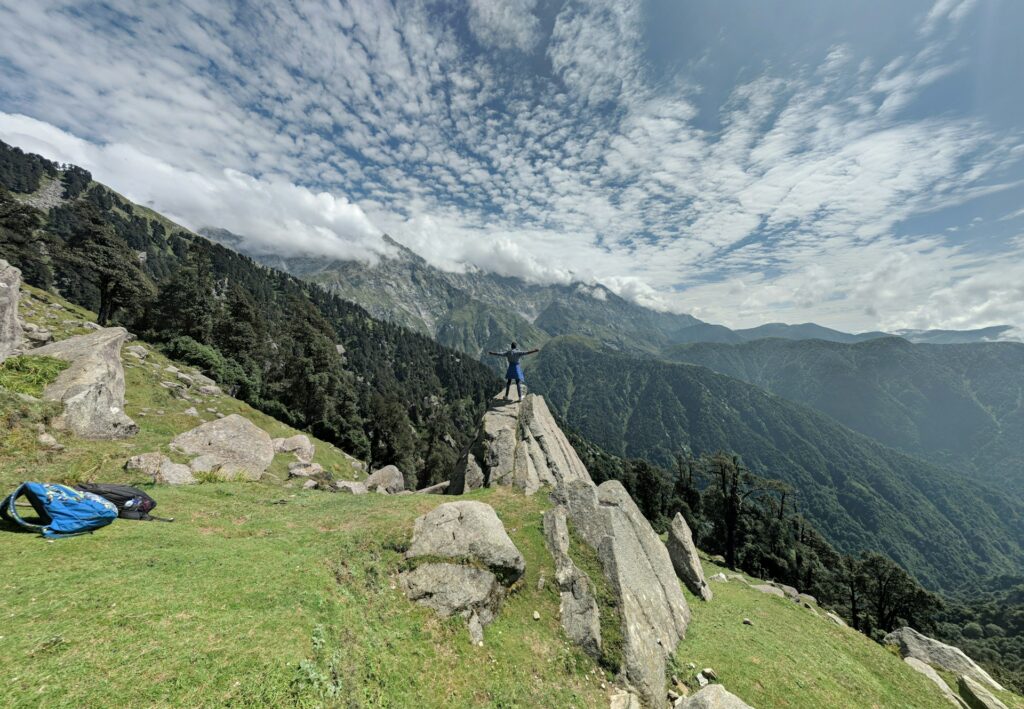
Nestled in the lap of the mighty Dhauladhar Range in Himachal Pradesh, Triund Trek is one of the most beloved and accessible Himalayan treks in all of India. Located just 9 kilometres from the spiritual town of McLeod Ganj — the home of the Dalai Lama and the Tibetan government-in-exile — Triund offers breathtaking panoramic views of snow-capped peaks, lush Kangra Valley, and dense Himalayan cedar forests. It is the crown jewel of trekking near Dharamshala.
At an altitude of approximately 2,828 metres (9,278 feet) above sea level, the Triund hilltop provides one of the most rewarding views any trekker can experience in North India. To the north, the imposing Dhauladhar Range towers above you with its jagged, snow-laden ridges. To the south, the vast green carpet of the Kangra Valley stretches all the way to the horizon on a clear day. The entire setting is nothing short of magical.
Unlike many Himalayan treks that require weeks of preparation and professional guides, Triund is special because it is accessible to beginners, families, students, solo travellers, and seasoned trekkers alike. The trail begins from Dharamkot or Gallu Devi Temple near McLeod Ganj and winds through oak and rhododendron forests before breaking into open alpine meadows near the summit.
What makes Triund truly iconic is the combination of factors it offers: stunning scenery, manageable distance, camping under a star-filled Himalayan sky, a rich cultural backdrop of Tibetan Buddhist culture in McLeod Ganj, and the sheer thrill of standing on a ridge with the Himalayas literally at arm’s reach.
Whether you’re a first-time trekker looking for your inaugural mountain experience or a seasoned hiker looking for a quick weekend escape from the plains of North India, Triund Trek is the answer. Thousands of trekkers visit Triund every year, and every single one of them comes back transformed by the experience.
2. Why Triund Trek is Perfect for Every Traveller
There are hundreds of treks in Himachal Pradesh alone, so what makes Triund stand out? Here are the reasons why trekkers from across India and the world keep choosing Triund:
Dharamshala is extremely well-connected by road, bus, and air (Gaggal Airport). Once you are in McLeod Ganj, the trailhead is within easy reach. You don’t need a week off work or an international flight to experience the Himalayas. A long weekend is more than enough.
With a total distance of approximately 9 kilometers one way and a manageable elevation gain, Triund is often recommended as the perfect “first trek” for beginners. The trail is well-marked and well-travelled, which means you won’t get lost easily. Yet the rewards at the top rival those of far more demanding treks.
While the peak season runs from March to June and September to November, Triund can technically be visited throughout the year, including winter, when snow transforms the trail into a magical white wonderland (with proper precautions).
The camping experience at Triund top is something that trekkers describe as life-changing. With minimal light pollution and clear mountain skies, the stars above Triund are dazzling. Waking up to a Himalayan sunrise over the Dhauladhar Range is a memory that stays with you forever.
Triund Trek is not just a physical journey — it is a cultural one. Your base, McLeod Ganj, is a vibrant mix of Tibetan Buddhism, Indian culture, and international backpacker energy. The monasteries, Tibetan food, meditation centers, and the presence of His Holiness the Dalai Lama make McLeod Ganj one of the most unique towns in all of India.
Photography Paradise: From the Dhauladhar peaks to the Kangra Valley, the forest trails to the open meadows, Triund is a photographer’s dream. The changing light through the day — from golden sunrise to crimson sunset — gives photographers an endless variety of shots.
Gateway to Higher Treks: For those who want more, Triund serves as the basecamp for the Snow Line Trek, and further adventures toward Lahesh Cave, Indrahar Pass, and even routes connecting to Chamba. Triund is not just a destination; it is a doorway to the higher Himalayas.
3. Triund Trek Overview & Quick Facts
| Feature | Details |
| Location | McLeod Ganj, Dharamshala, Himachal Pradesh, India |
| Trek Distance | ~9 km one way (18 km round trip) |
| Starting Point | Dharamkot / Gallu Devi Temple (1,457 m) |
| Summit Altitude | 2,828 m (9,278 feet) |
| Elevation Gain | ~1,371 metres |
| Duration | 4–6 hours (ascent), 3–4 hours (descent) |
| Difficulty Level | Easy to Moderate |
| Best Season | March–June, September–November |
| Camping | Available at Triund Top |
| Permit Required | Yes (from Forest Department) |
| Nearest Town | McLeod Ganj (9 km) |
| Nearest Airport | Gaggal Airport, Kangra (~15 km from Dharamshala) |
| Nearest Railway | Pathankot Railway Station (~90 km) |
4. How to Reach Dharamshala & McLeod Ganj
Getting to the starting point of Triund Trek requires first reaching Dharamshala or McLeod Ganj. Here is a comprehensive guide on all modes of transport:
The closest airport to Dharamshala is Gaggal Airport (also known as Kangra Airport or Dharamshala Airport), located approximately 15 kilometres from Dharamshala and about 20 kilometres from McLeod Ganj. Regular flights operate from Delhi (approximately 1 hour flight time). Airlines including IndiGo and Air India connect Delhi to Gaggal. From the airport, taxis are readily available.
VisitTaxi offers reliable airport pickup and drop services from Gaggal Airport to McLeod Ganj. We also provide Pick up as well as drop services form Pathankot . Contact us at +91 9855277372 or email tourguide008@gmail.com to pre-book your airport taxi and start your Triund Trek adventure stress-free.
The nearest major railway station is Pathankot Junction, approximately 90 kilometers from Dharamshala. From Pathankot, you can take a bus or hire a taxi to Dharamshala/McLeod Ganj (approximately 2.5 to 3 hours by road). There is also a narrow-gauge toy train from Pathankot to Kangra, but it is slow and primarily scenic.
Another option is to travel to Chandigarh Railway Station or Jammu Tawi Railway Station, both of which have frequent train connections from major Indian cities, and then take a taxi or bus to Dharamshala (approximately 5 hours from Chandigarh, 4 hours from Jammu).
HRTC (Himachal Road Transport Corporation) operates comfortable Volvo and ordinary buses from Delhi’s ISBT Kashmiri Gate to Dharamshala. The journey takes approximately 12 to 14 hours overnight, making it a popular budget option for backpackers. Buses also operate from Chandigarh, Amritsar, Shimla, Manali, and other major Himachali towns.
From Dharamshala bus stand, local buses and shared autos regularly run up to McLeod Ganj (approximately 10 kilometers, 30–45 minutes).
The most convenient, comfortable, and flexible way to reach McLeod Ganj — especially for families, groups, or those travelling with luggage — is by taxi. visittaxi.com provides premium taxi services from Delhi, Chandigarh, Amritsar, Pathankot, and all nearby cities to Dharamshala and McLeod Ganj.
We also offer:
- Local sightseeing taxis in and around Dharamshala
- McLeod Ganj to trailhead transfers (Dharamkot / Gallu Temple)
- Post-trek pick-up services
- Outstation taxi packages covering multiple destinations in Himachal Pradesh
📞 Call us: +91 9855277372 📧 Email: tourguide008@gmail.com
5. Triund Trek Route: Step-by-Step
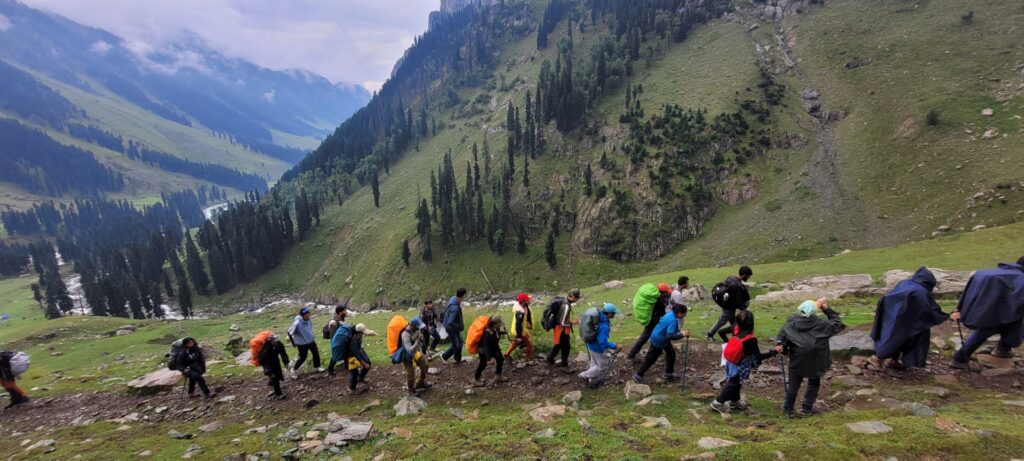
Understanding the trail before you set foot on it is essential for a safe and enjoyable experience. Here is a detailed, step-by-step breakdown of the Triund Trek route:
Trailhead: Dharamkot / Gallu Devi Temple (1,457 m)
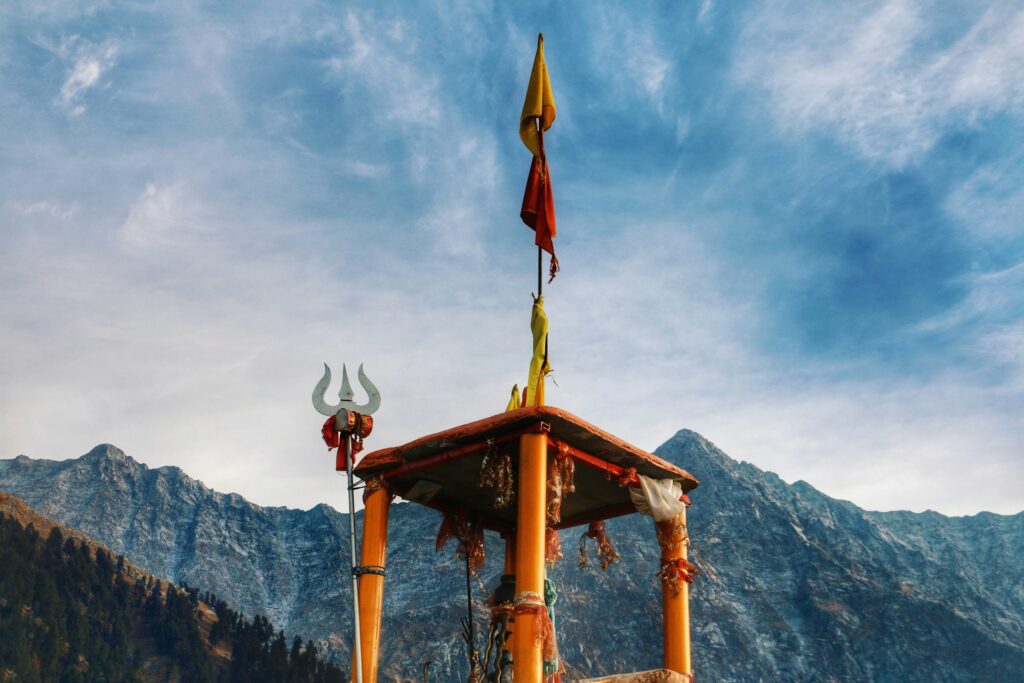
The trek officially begins from either Dharamkot Village or the nearby Gallu Devi Temple (also called Galu Temple). Both starting points are approximately 2 kilometres uphill from McLeod Ganj and can be reached by taxi, auto-rickshaw, or on foot. The Gallu Devi Temple is a small but revered shrine dedicated to Goddess Galu, and many trekkers stop here to seek blessings before beginning the climb.
The forest department permit check-post is located near the Gallu Temple, where you will need to show your permit before proceeding. The trail from Gallu Temple is generally considered the main and most well-trodden route.
Section 1: Gallu Temple to Magic View Café (~3 km)
The first section of the trek takes you through a beautiful and dense forest of oak, rhododendron, and Himalayan cedar. The path here is moderately steep but well-defined. You will come across several small tea stalls and resting spots along the way.
Approximately 3 kilometers into the trek, you will reach a spot popularly known as the “22 Curves” or “22 Bends” — a series of sharp switchbacks that climb steeply through the forest. While these bends are the most physically demanding part of the trek, they are also where the forest is at its most beautiful. Take your time here, rest when needed, and enjoy the dappled light filtering through the canopy.
Just past the 22 Bends, the famous Magic View Café sits at a vantage point that rewards your effort with the first sweeping views of the valley below. This is an excellent rest stop for tea, Maggi, and snacks. Many trekkers consider reaching Magic View Café as the psychological halfway point of the trek.
Section 2: Magic View Café to Triund Top (~6 km)
After Magic View Café, the trail gradually opens up as the dense forest begins to thin. You start to see the sky more clearly and the views improve dramatically. The trail here becomes a mix of rocky paths and open stretches, and on a clear day, you can begin to see the snow-capped Dhauladhar peaks looming ahead.
As you continue, the vegetation changes from thick forest to low alpine shrubs and grasslands. The trail may feel exposed here on windy days, but the scenery more than compensates. Look back and you will see the entire Kangra Valley laid out below you — a sight that grows more spectacular with every step upward.
The final kilometer of the trek involves a gentle but sustained uphill push across open grassland. Suddenly, the ridgeline appears and you step onto the Triund Top — a wide, flat meadow perched on the edge of the Dhauladhar Range.
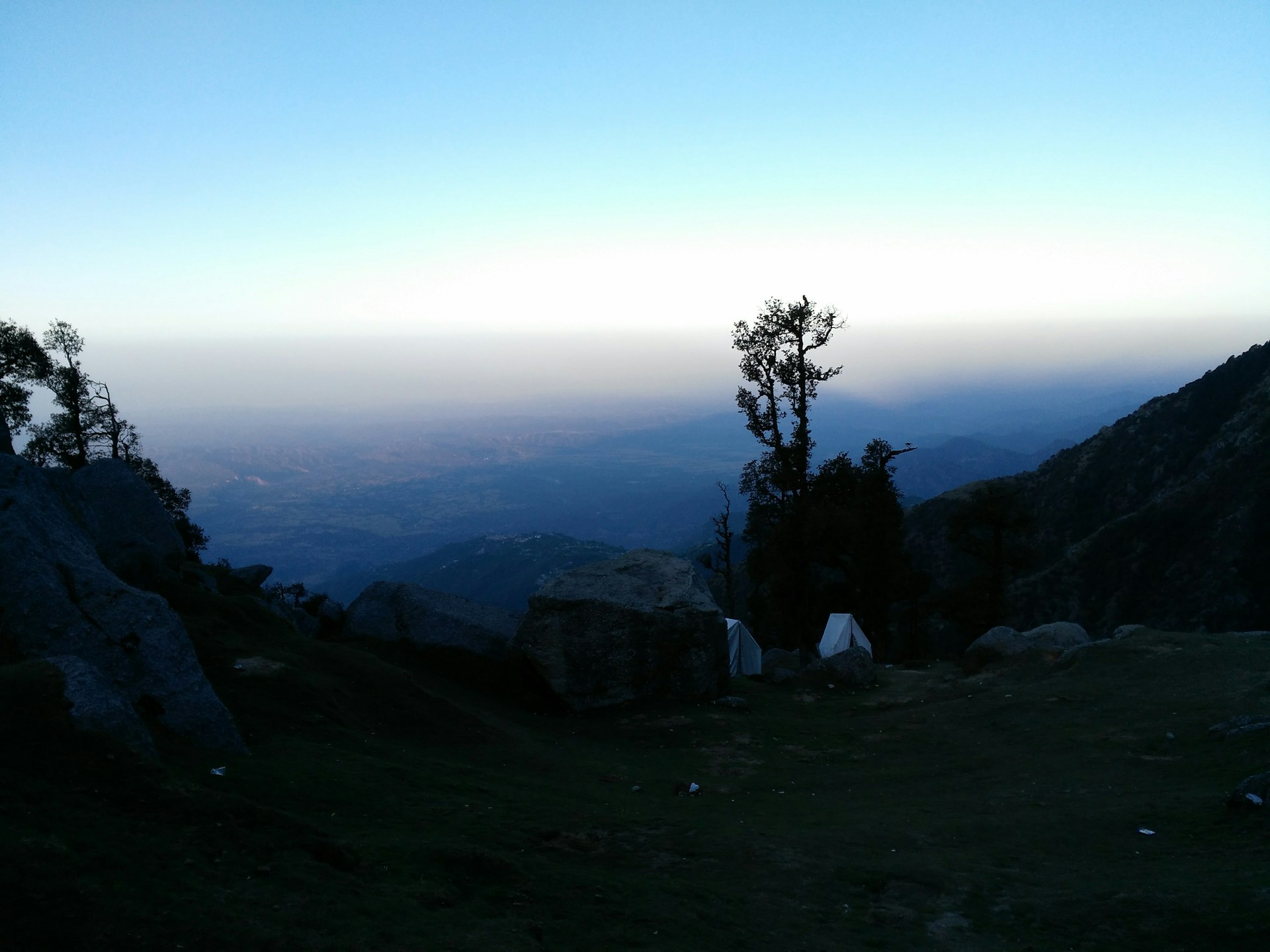
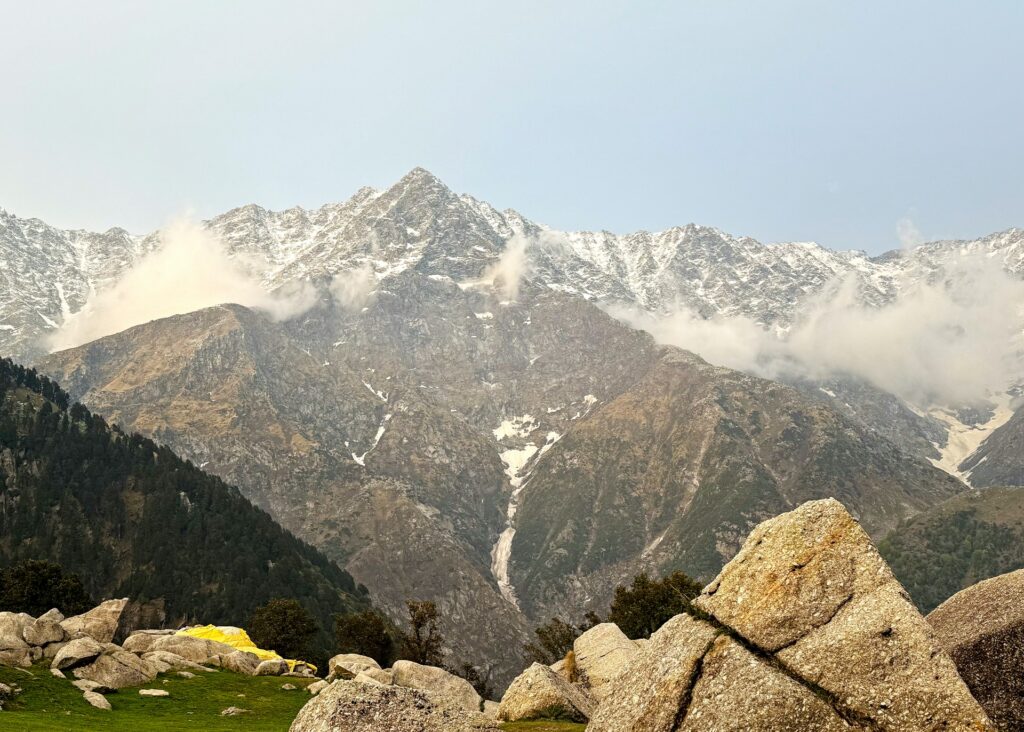
The moment you arrive at Triund Top, the landscape changes dramatically and completely. To your north, the vertical rock faces and glaciers of the Dhauladhar Range rise sharply into the sky, almost close enough to touch. The nearest peaks — including Mun Peak and Indrahar Pass — dominate the skyline with an almost intimidating grandeur.
To the south, the Kangra Valley — one of the most fertile and beautiful valleys in the western Himalayas — spreads out in shades of green and gold. On a particularly clear day, you can see as far as the plains of Punjab in the far distance.
The meadow at Triund Top is dotted with a handful of permanent stone structures — a small dhaba (food stall) serving basic food and hot drinks, toilet facilities, and a forest department rest house. Camping zones are clearly marked across the meadow.
6. Best Time to Visit Triund Trek
One of the advantages of Triund Trek is that it can be visited in multiple seasons, each offering a completely different experience. Here is a month-by-month guide:
March to June (Peak Season – Spring/Early Summer)
This is the most popular time to visit Triund. The weather is pleasant — daytime temperatures at the top hover between 10°C and 20°C, while nights can drop to 5°C or below. The sky is often clear and the views of the Dhauladhar Range are spectacular.
March and April bring rhododendrons in full bloom, painting the forested trail in bright red and pink. The forest is lush and green from the winter rains. May and June, while slightly warmer, are excellent for trekking and camping before the monsoon arrives.
This is the ideal season for first-time trekkers and those who want the full Triund experience — good weather, beautiful views, and comfortable camping conditions.
July to August (Monsoon Season)
The monsoon arrives in Dharamshala typically around late June and lasts through August. Dharamshala is one of the wettest places in the Himalayas — it receives some of the highest rainfall anywhere in India. The Triund trek becomes significantly more challenging during this period due to wet and slippery trails, frequent cloud cover (obscuring the famous views), and the risk of landslides.
Trekking to Triund during the monsoon is generally not recommended for beginners or casual trekkers. Those who do venture out should take extra precautions, waterproof their gear, and keep a close watch on weather forecasts.
That said, the monsoon does transform the landscape into a lush green paradise, and some experienced trekkers love the misty, ethereal quality of the forest during this season.
September to November (Post-Monsoon – Best Season)
September through November is often considered the absolute best time to trek to Triund. The monsoon rains have washed the air clean, the sky is an impossibly deep blue, and visibility is at its maximum. The Dhauladhar peaks, sometimes dusted with fresh snow after September showers, gleam brilliantly against the blue sky.
The temperatures are comfortably cool — ideal for hiking — and the crowds are slightly thinner than the peak summer months. October is particularly magical, with a golden quality to the light and the first hints of autumn colours in the forest.
December to February (Winter Season)
Winter at Triund is a completely different world — and an absolutely stunning one for those who come prepared. Snow blankets the entire trail from around December, and by January and February, the Triund meadow can be under several feet of snow.
Winter trekking to Triund requires proper winter gear — insulated jackets, snow gaiters, micro-spikes or crampons, and a cold-rated sleeping bag. Night temperatures at the top can plummet to -10°C or even lower.
The winter experience is extraordinary: the silence of a snow-covered Himalayan landscape, the brilliant contrast of white snow against a clear blue sky, and the sense of having the mountain largely to yourself. Many experienced trekkers consider a winter Triund their most memorable experience.
7. Difficulty Level & Fitness Requirements
Triund Trek is classified as an Easy to Moderate trek, making it one of the most accessible high-altitude treks in India. Here is what to realistically expect:
Distance: 9 km one way (18 km round trip if you do not camp overnight)
Elevation Gain: Approximately 1,371 meters over 9 kilometers, which gives an average gradient that is moderate — neither the gentle slopes of a forest walk nor the brutal steepness of technical mountain routes.
Physical Requirements: A reasonably healthy adult with no major cardiovascular or respiratory issues should be able to complete this trek with proper preparation. You do not need to be a professional athlete or have prior trekking experience.
Recommended Preparation:
- Walk for at least 30–45 minutes daily in the 2–3 weeks leading up to the trek
- Include stair climbing or uphill walking in your preparation
- Stay hydrated in the days before the trek
- Get adequate sleep before your trekking day
For Beginners: The 22 Bends section is the most challenging part of the trek and may require multiple short breaks. This is perfectly normal and expected. Take your time, maintain a steady pace, and remember that slow and steady absolutely wins this race.
For Children: Many families successfully complete the Triund Trek with children as young as 7 or 8 years old, provided the children are active and healthy. Allow extra time and carry sufficient snacks and water. The forest sections delight children with their natural beauty.
For Senior Trekkers: Several people in their 50s and 60s complete Triund every season. Listen to your body, maintain a comfortable pace, and do not hesitate to rest as needed.
Altitude Consideration: At 2,828 metres, Triund is below the threshold at which serious altitude sickness (AMS) typically begins (usually above 3,000 metres for most people). However, people who are particularly sensitive to altitude or who are coming from sea-level cities should ascend gradually and stay alert for any symptoms of altitude sickness including headache, nausea, dizziness, and shortness of breath.
8. Permits & Entry Fees
A forest department permit is mandatory to trek to Triund. Without a valid permit, you will be turned back at the Gallu Devi check-post.
Permit Details:
- Issuing Authority: Himachal Pradesh Forest Department
- Collection Point: Gallu Temple check-post OR the Forest Department office in McLeod Ganj
- Fee: Approximately ₹50 to ₹100 per person (subject to change; check current rates before your visit)
- Camping Fee: Separate camping fees apply if you plan to camp at Triund Top
- Timing: The check-post is typically open from early morning until late afternoon. It is strongly advisable to begin your trek early in the morning (by 8–9 AM) to ensure you reach the top before dark.
Important: Always carry your permit with you throughout the trek, as there may be spot checks on the trail.
Group Permits: Groups can obtain permits at the same location. There is no special group discount, but the process is the same.
Photography Permit: There is no separate photography permit required for personal photography. Commercial photography or film shoots may require additional permissions from the district authorities.
9. Camping at Triund
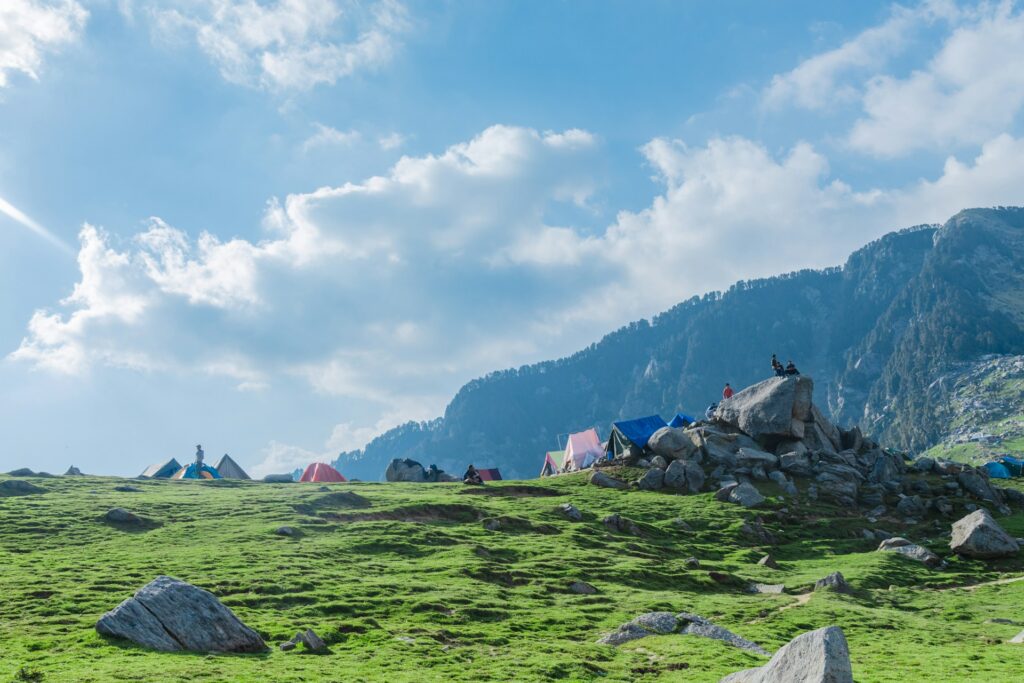
Camping at Triund Top is one of the most iconic outdoor experiences available in North India. The combination of Himalayan peaks, vast open skies, and cool mountain air creates an unforgettable overnight experience.
Tented Camp Rentals: Several operators at Triund Top (and some from McLeod Ganj) offer tent rental services. You can rent a sleeping bag, tent, and basic camping equipment for the night. Prices typically range from ₹500 to ₹1,500 per person, depending on the quality of equipment and whether meals are included.
Bring Your Own Camping Gear: Experienced campers who own their own tents and sleeping bags can camp freely in the designated camping areas. This is the most economical option and gives you the greatest flexibility.
Designated Camping Zones: Camping is only permitted in designated areas on Triund Top. Do not camp on the trail, in the forest, or outside the marked zones, both for your own safety and for environmental protection.
What a Night at Triund is Like
The experience of an overnight stay at Triund is difficult to put into words. After sunset, the temperature drops quickly — sometimes dramatically — and you retreat to your tent or huddle around a small fire (where permitted) with fellow trekkers. The warmth of shared stories and hot chai from the dhaba creates an instant community among strangers.
As the darkness deepens, the sky becomes a canvas of stars unlike anything visible from any Indian city. The Milky Way stretches overhead in full glory, and on moonless nights, the sky is so brilliant and dense with stars that it seems almost surreal. The dark silhouette of the Dhauladhar Range against this star-filled sky is a sight that has moved even the most seasoned travellers to silence.
At dawn, the mountain peaks gradually illuminate with the first soft pink and gold light of sunrise. The transition from night to day on a Himalayan ridge is one of nature’s greatest spectacles, and experiencing it from Triund is a privilege that you will carry with you for the rest of your life.
Small campfires may be permitted in designated areas — confirm with the local forest department. Never start a fire in forested areas or outside designated spots. Keep all campfire areas clean and ensure the fire is completely extinguished before sleeping.
10. What to Pack for Triund Trek
Packing smart is crucial for an enjoyable Triund Trek. Here is a comprehensive packing list:
- Base Layer: Moisture-wicking thermal or synthetic t-shirt (avoid cotton, which retains sweat)
- Mid Layer: A fleece jacket or light down jacket for cooler temperatures
- Outer Layer: A waterproof and windproof jacket — essential even in summer
- Trekking Trousers: Comfortable, quick-dry trekking pants (avoid jeans)
- Extra Socks: At least 2–3 pairs of good quality trekking socks
- Warm Cap/Beanie: Essential for cold mornings and evenings at altitude
- Gloves: Light gloves for protection against cold and wind
- Sun Hat/Cap: For protection from strong mountain sun
- Gaiters: Optional but useful in winter or post-monsoon muddy conditions
- Trekking Boots or Shoes: The single most important piece of gear. Good ankle support and grip are essential. Well-broken-in trail runners are also acceptable for summer/autumn trekking.
- Extra Sandals/Flip-Flops: Lightweight camp footwear for relaxing at Triund Top
- Daypack (20–30 litres): Large enough for a day’s supplies but not so heavy it slows you down
- Rain Cover for Backpack: Essential during monsoon; useful in any season
- Trekking Poles: Optional but highly recommended for beginners and for the descent
- Headlamp with Extra Batteries: Essential for early morning starts or if you end up hiking in the dark
- Sleeping Bag: Rated to at least -5°C for summer camping; -15°C or below for winter
- Tent: If not renting at the top
- Personal First Aid Kit: Including blister plasters, antiseptic cream, bandages, paracetamol, ibuprofen, ORS packets
- Altitude Sickness Medication: Consult your doctor about carrying Diamox if you are particularly sensitive to altitude
- Sunscreen (SPF 50+): Mountain UV radiation is significantly stronger than at sea level
- Lip Balm with SPF: Wind and UV cause rapid lip chapping at altitude
- Insect Repellent: Useful in the forested lower sections
- Water Bottles/Hydration Bladder: Carry at least 2 litres of water capacity
- Water Purification Tablets or Filter: For refilling from mountain streams
- High-Energy Snacks: Nuts, trail mix, energy bars, dry fruit, chocolate
- Lunch/Snacks: You can buy Maggi and snacks at trail-side stalls, but it’s wise to carry backup food
- Government-Issued ID: Required for the permit
- Forest Department Permit: Obtained before starting the trek
- Cash: Most trail stalls and the dhaba at Triund Top are cash-only; ATMs are available in McLeod Ganj
- Fully Charged Mobile Phone: With offline maps downloaded (GPS is useful even without signal)
- Power Bank: Mobile signal can be weak, and your phone’s GPS and camera will drain battery fast
11. Food & Water on the Trail
One of the convenient aspects of Triund Trek is that food is available at several points along the trail. You will find small stalls and temporary cafés selling:
- Maggi Noodles: The iconic mountain trekker’s meal — hot, filling, and deeply comforting after a climb
- Bread Omelettes and Paratha: Available at most stalls
- Tea and Coffee: Hot beverages are available at regular intervals
- Biscuits, Chips, and Chocolate: Basic packaged snacks
- Rice and Dal: At the dhaba on Triund Top, basic cooked meals are available
Note: Prices at trail-side stalls are higher than in McLeod Ganj — this is normal and expected given the effort required to transport supplies. Budget accordingly.
Water is available at multiple points on the trail, including from small natural springs and at the dhaba/stalls. Always carry at least 1.5 to 2 litres of water and refill when opportunities arise. If filling from natural springs or streams, use purification tablets or a portable filter.
Dehydration is one of the most common issues trekkers face, often without realizing it. The combination of physical exertion and dry mountain air causes faster fluid loss than you might expect. Drink regularly — even if you don’t feel thirsty.
12. Flora, Fauna & Natural Beauty
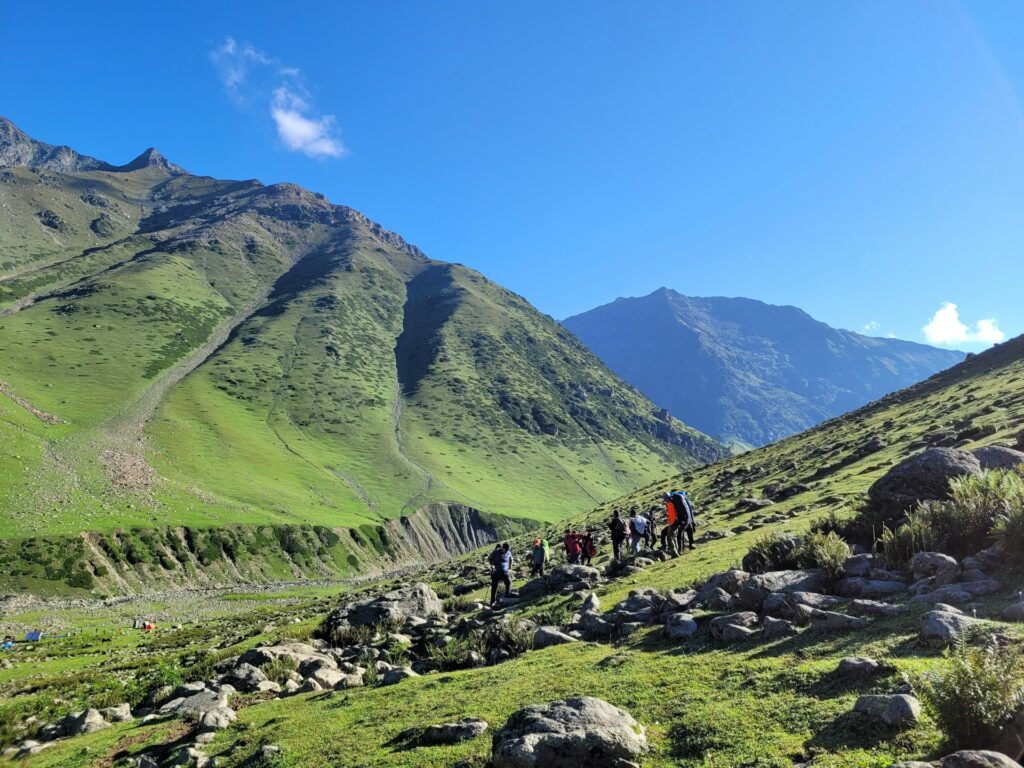
One of the great joys of Triund Trek is the sheer natural beauty you walk through — and the wildlife you may be fortunate enough to encounter.
The lower sections of the trek pass through dense forests of Himalayan Cedar (Deodar), Oak (Banj Oak), and Rhododendron. In spring (March–April), the rhododendrons burst into brilliant red and pink blooms, creating some of the most photogenic sections of the trail.
As you gain altitude, the forest gives way to shrubs and alpine grassland. The Triund meadow itself is carpeted in green grass during the warmer months, dotted with wildflowers including geraniums, asters, and primulas.
Triund and its surrounding forests are home to a variety of wildlife species. Keep your eyes and ears open for:
- Himalayan Langur: These large silver-grey monkeys are commonly seen in the forests near Dharamkot and on the lower trail sections
- Barking Deer (Muntjac): A small, shy deer species that you may spot in the forest, usually at dawn or dusk
- Himalayan Black Bear: Present in the area, though rarely seen by trekkers. Follow standard bear safety protocols (make noise on the trail, keep food secured at camp)
- Himalayan Monal: The state bird of Himachal Pradesh and one of the most spectacular birds in the Himalayas, with brilliant multicoloured plumage. Keep your binoculars ready
- Various Raptors: Eagles, hawks, and vultures can often be seen soaring on thermals above the ridge
- Butterflies and Insects: The forested sections teem with hundreds of species in the warmer months
The Dhauladhar Range that forms the northern backdrop of Triund is itself one of the most dramatic and beautiful mountain ranges in the western Himalayas. Rising almost vertically from the Kangra Valley floor to heights exceeding 4,500 metres (and with peaks like Mun Peak reaching 4,890 metres), the Dhauladhar creates a wall of rock, ice, and snow that is simply awe-inspiring.
13. Snow Line Trek: Beyond Triund
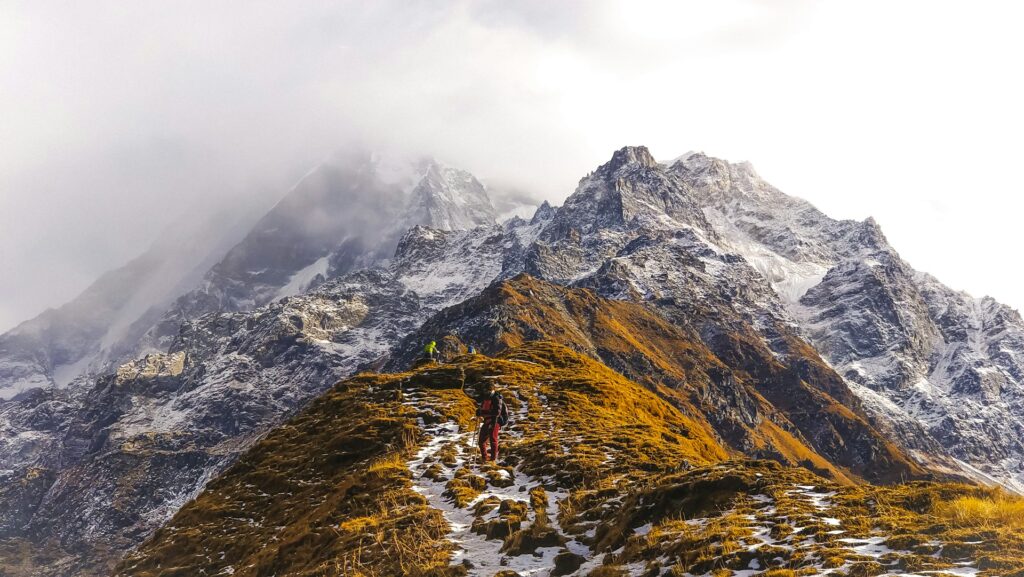
For those who find Triund delightful but hunger for more, the Snow Line Trek extends the adventure beyond Triund and up toward the permanent snowfields of the Dhauladhar Range.
- Starting Point: Triund Top (2,828 m)
- Snow Line Altitude: Approximately 3,500 m
- Additional Distance: ~3–4 km from Triund
- Difficulty: Moderate to Difficult
From Triund, a trail continues northward and upward toward the base of the Dhauladhar. After approximately 3 kilometres of increasingly steep terrain, you reach the permanent Snow Line — the point above which snow lies year-round (in most years). This is where the trail becomes significantly more technical and requires proper equipment and, ideally, a guide.
Beyond the Snow Line, the trail continues to Lahesh Cave — a natural cave at approximately 3,800 metres that serves as a shelter for trekkers aiming for the Indrahar Pass (4,342 m). Lahesh Cave is the overnight camping point for serious trekkers attempting the full Indrahar Pass crossing, which connects the Kangra Valley to the Chamba Valley.
The Indrahar Pass Trek is a serious high-altitude adventure that takes approximately 3–4 days from McLeod Ganj. It requires experience, proper equipment, and ideally a certified mountain guide. The pass involves crossing permanent snow and, in certain seasons, glacier ice. However, the rewards are extraordinary: views that rank among the finest in the entire western Himalayan region, and the satisfaction of a genuine Himalayan crossing.
14. Safety Tips & Precautions
Safety is paramount on any mountain trek. Here are essential safety guidelines for Triund Trek:
Start Early: Begin your trek by 7–9 AM at the latest. This gives you ample time to reach the top before afternoon clouds (which can dramatically reduce visibility) build up, and ensures you are not descending in the dark.
Check the Weather: Always check the weather forecast before and during your trek. Mountain weather changes rapidly. If you see dark clouds building, consider descending early rather than waiting at the top.
Stay on the Marked Trail: The Triund trail is well-marked, but it is still possible to stray off-route in foggy conditions. Do not attempt shortcuts, especially downhill through forested areas.
Descend Before Sunset: If you are doing a day trek (no camping), ensure you begin your descent in time to reach the trailhead well before sunset.
Tell Someone Your Plans: Always inform someone — your hotel, a friend, or the forest check-post — of your trekking plans, including your expected return time.
Never Trek Alone in Bad Weather: If weather deteriorates significantly on the trail, do not continue upward alone. Wait for conditions to improve or descend in company.
Mobile Signal: Mobile signal is weak to non-existent on much of the trail and at Triund Top. Download offline maps before starting. BSNL often has slightly better coverage in remote Himachal areas than private operators.
Hypothermia Awareness: Even in summer, temperatures at Triund Top drop dramatically after sunset. Carry warm layers and a sleeping bag rated for the expected night temperatures. Know the signs of hypothermia (intense shivering, confusion, clumsiness) and treat it seriously.
Wildlife: Do not feed or approach wild monkeys on the trail — they can be aggressive, especially if they smell food. Keep your food secured in your pack at all times.
Leave No Trace: Take all your rubbish back down with you. The forest and meadow ecosystems at Triund are fragile and heavily impacted by tourism. Every piece of litter you remove makes a difference.
15. Where to Stay in McLeod Ganj
McLeod Ganj offers accommodation options for every budget, from ₹300-a-night backpacker dormitories to comfortable mid-range hotels and boutique guesthouses.
McLeod Ganj is a classic backpacker hub and has dozens of cheap guesthouses and hostels. The Bhagsu Nag area (a short walk from McLeod Ganj center) and Dharamkot village (nearest to the trailhead) are particularly popular with budget travellers. Expect basic but clean rooms with hot water (usually from a geyser), wifi, and local restaurants nearby.
Popular budget areas: Dharamkot Road, Bhagsu Road, Old McLeod Ganj Road
Several comfortable mid-range hotels and guesthouses offer en-suite rooms, valley views, and good in-house restaurants. Many of these properties are run by Tibetan families and offer a warm, culturally rich experience.
If your trek starts early the next morning, strongly consider staying the night before in Dharamkot — the village closest to the trailhead. This saves time and taxi costs in the morning, and allows you to begin the trek as early as 6:30 or 7:00 AM.
16. Things to Do Around Dharamshala
Your trip to Triund and McLeod Ganj can easily be extended into a rich, multi-day Dharamshala itinerary. Here are the top attractions and activities:
Tsuglagkhang Complex (Dalai Lama Temple): The spiritual heart of the Tibetan exile community, this complex includes the main Tibetan Buddhist temple, a museum, and the official residence of His Holiness the Dalai Lama. Visitors can attend public prayers and teachings (schedule varies — check the official Dalai Lama website).
Namgyal Monastery: One of the most important Tibetan monasteries outside Tibet, open to visitors throughout the day. Attend morning prayers for an atmospheric and moving experience.
Bhagsu Nag Waterfall: A short and easy 1.5 km walk from McLeod Ganj leads to the beautiful Bhagsu Nag waterfall, a popular destination especially in the post-monsoon season when it flows powerfully.
Dharamshala Cricket Stadium: One of the most scenic cricket grounds in the world, perched in the mountains with views of the snow-capped Dhauladhar Range. Tours are available when no matches are scheduled.
Norbulingka Institute: Located in lower Dharamshala, the Norbulingka Institute is a Tibetan cultural preservation centre dedicated to traditional Tibetan arts and crafts. The beautifully landscaped gardens and skilled craftspeople at work make this a fascinating visit.
Kangra Fort: One of the oldest and largest forts in the Himalayas, located about 20 kilometers from Dharamshala near Kangra town. The fort has a turbulent history spanning over 3,500 years and offers panoramic views of the Kangra Valley.
Masrur Rock Cut Temple: A partially-ruined but magnificent group of 8th-century rock-cut temples located about 40 kilometers from Dharamshala. Often compared to Ellora and Mahabalipuram in its artistic ambition.
Tibetan Markets & Cafés: McLeod Ganj’s main bazaar is lined with Tibetan handicraft shops selling thangka paintings, prayer wheels, incense, jewellery, and clothing. The café scene is vibrant and eclectic — try momos (Tibetan dumplings), thukpa (noodle soup), and butter tea.
Meditation & Yoga Retreats: McLeod Ganj is one of the premier destinations in India for meditation and yoga retreats. Numerous centers offer courses of varying durations, from single-day introductory sessions to month-long residential programmes.
VisitTaxi can arrange day-trip taxis to all of the above attractions, allowing you to explore the region in comfort and at your own pace. Contact us at +91 9855277372 or tourguide008@gmail.com for custom tour packages.
17. Frequently Asked Questions
Q: Is Triund Trek safe for beginners? A: Yes. Triund is widely considered one of the best introductory treks in India. The trail is well-marked, services are available at regular points, and the difficulty level is classified as easy to moderate. Beginners should start early, carry sufficient water and snacks, and take their time especially through the 22 Bends section.
Q: Can I do Triund Trek in a single day (without camping)? A: Yes, it is possible to do Triund as a day trek — going up and coming back down on the same day. However, this means you miss the magical sunset and sunrise at Triund Top, which most trekkers consider the highlight of the experience. If doing a day trek, start by 7–8 AM and ensure you begin descending by 2–3 PM to reach the trailhead before dark.
Q: Is the Triund Trek open in winter? A: The trail is technically open year-round, but winter trekking to Triund requires proper preparation, experience, and equipment (crampons, heavy-duty sleeping bags, etc.). The forest department may close the trail temporarily during heavy snowfall or dangerous conditions. Always check with local authorities before attempting a winter Triund Trek.
Q: Do I need a guide for Triund Trek? A: A professional guide is not mandatory for the main Triund Trail, as it is well-marked. However, if you are a complete beginner, going solo, or planning to venture beyond Triund to the Snow Line or Indrahar Pass, a guide is strongly recommended and may be required by the forest department.
Q: Is there mobile connectivity on the trail? A: Mobile signal is weak and intermittent on the trail, and largely absent at Triund Top. Download offline maps before starting. BSNL may have slightly better coverage. Inform someone of your plans before losing signal.
Q: What should I eat before the trek? A: Have a substantial, balanced meal the evening before. On the morning of the trek, eat a proper breakfast — eggs, paratha, or other protein-rich options available at McLeod Ganj’s many restaurants. Avoid starting the trek on an empty stomach.
Q: Is Triund Trek suitable for children? A: Yes, many families complete Triund with children aged 7 and above. Allow extra time, carry abundant snacks, and pace yourselves to the slowest member of the group. Children who are active and enjoy outdoor activities typically love the Triund experience.
Q: What is the altitude of Triund and should I worry about altitude sickness? A: Triund is at 2,828 meters (approximately 9,278 feet). Most healthy individuals do not experience significant altitude sickness at this altitude, especially if they have acclimatized for a day in McLeod Ganj before trekking. If you are coming directly from sea level and plan to trek the same day, be cautious and watch for symptoms.
18.Book Your Taxi to Triund Trek with VisitTaxi
Your Triund Trek adventure begins the moment you decide to go — and the right transport partner makes all the difference. VisitTaxi is your trusted travel companion for everything from airport pickups in Dharamshala to customized Himachal Pradesh tour packages.
- Experienced Local Drivers: Our drivers know the mountain roads intimately and prioritize your safety above all else
- 24/7 Availability: We are available round the clock for bookings, queries, and emergencies
- Transparent Pricing: No hidden charges, no last-minute surprises — just honest, upfront pricing
- Comfortable Fleet: Well-maintained vehicles including Innova, Ertiga, Tempo Traveller, and more for every group size
- Customized Itineraries: Tell us your travel dates, group size, and interests, and we will design the perfect Himachal Pradesh itinerary for you
- Hotel Tie-Ups: We can recommend and help book the right accommodation in McLeod Ganj for every budget
Our Popular Services for Triund Trekkers
- Pathankot/Gaggal Airport to McLeod Ganj Taxi
- Delhi/Chandigarh to Dharamshala Outstation Taxi
- McLeod Ganj to Dharamkot (Triund Trailhead) Local Transfer
- Post-Trek Pickup from Dharamkot
- Dharamshala Sightseeing Packages (Kangra Fort, Masrur Temple, Norbulingka, etc.)
- Dharamshala to Dalhousie / Manali / Shimla Outstation Taxi
📞 Contact visittaxi.com Now
Phone / WhatsApp: +91 9855277372
Email: tourguide008@gmail.com
Website: visittaxi.com
We are available 24 hours a day, 7 days a week. Call us, WhatsApp us, or email us — we respond fast and we are always happy to help you plan the perfect Triund Trek experience.
“The mountains are calling and I must go.” — John Muir
Triund is not just a trek. It is a reminder of what it feels like to be small in the best possible way — standing on a ridge at the foot of the Himalayas, with the whole world laid out below you and the sky enormous above. It is the kind of experience that resets something inside you, that reminds you why you travel in the first place.
We at VisitTaxi are honored to be the bridge between you and that experience. From the moment you call us to the moment you step onto the Triund meadow, we will make sure your journey is smooth, safe, and unforgettable.
Call us today at +91 9855277372 and let’s start planning your Triund Trek adventure.