Delhi — the city that breathes history with every gust of wind — is one of the most layered, complex, and rewarding destinations in all of Asia. As India’s national capital and one of the world’s oldest continuously inhabited cities, Delhi sits at the crossroads of centuries. It is a city where a crumbling Mughal-era mosque stands steps away from a gleaming glass mall, where autorickshaws honk past luxury sedans, and where street food rivals five-star cuisine for sheer depth of flavour.
Covering an area of over 1,484 square kilometers and home to more than 33 million people, Delhi is not one city — it is many cities layered atop one another. Old Delhi (Shahjahanabad) pulses with medieval energy. New Delhi, designed by Edwin Lutyens, carries an imperial grandeur. South Delhi radiates cosmopolitan cool. And the newer satellite townships of Dwarka, Rohini, and Noida blur seamlessly into the metropolis.
Whether you are a history enthusiast walking the corridors of Mughal emperors, a foodie chasing kebabs in narrow bylanes, a shopaholic hunting handcrafted textiles, or a traveler simply seeking to understand modern India — Delhi delivers, again and again.
This guide is your comprehensive companion: how to reach Delhi, getting around the city, the best places to visit, famous markets, hidden gems, iconic food joints, and the ideal time to plan your trip. Let us begin.
Table of Contents
How to Explore Delhi: A Practical Approach. 1
Top Places to Visit in Delhi 1
How to Reach Delhi
By Air
Indira Gandhi International Airport (IATA: DEL) is one of South Asia’s largest and busiest airports, handling over 70 million passengers annually. It is extremely well-connected domestically and internationally.
**International flights** arrive from all major global hubs including London (Heathrow), Dubai, Singapore, New York, Toronto, Frankfurt, and Bangkok. Airlines such as Air India, IndiGo, Emirates, British Airways, Singapore Airlines, and Lufthansa operate frequent services.
**Domestic flights** connect Delhi to virtually every Indian city — Mumbai, Bengaluru, Chennai, Kolkata, Hyderabad, Jaipur, and over 80 more destinations. IndiGo, Air India, SpiceJet, and Vistara (now merged with Air India) are the principal carriers.
The airport sits about 16–22 kilometers southwest of central Delhi. The Delhi Metro Airport Express Line connects Terminal 3 directly to New Delhi Railway Station in under 20 minutes, making it one of the most efficient airport-to-city rail links in India.
By Train
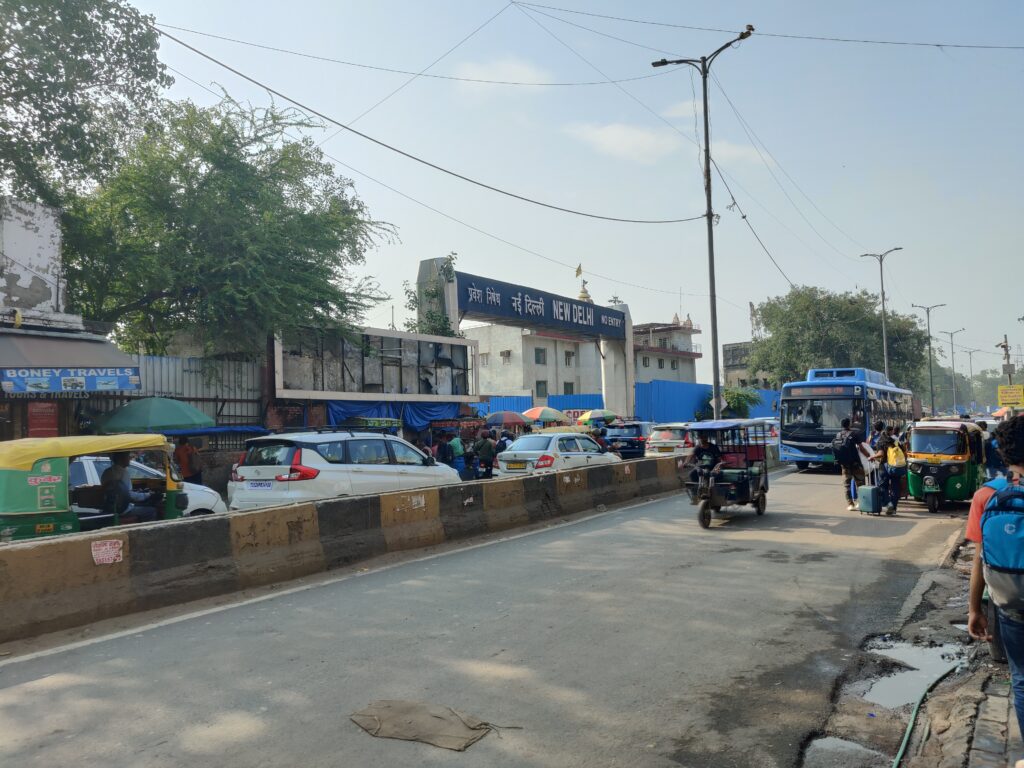
Delhi is the nerve center of India’s railway network. The city has six major railway terminals:
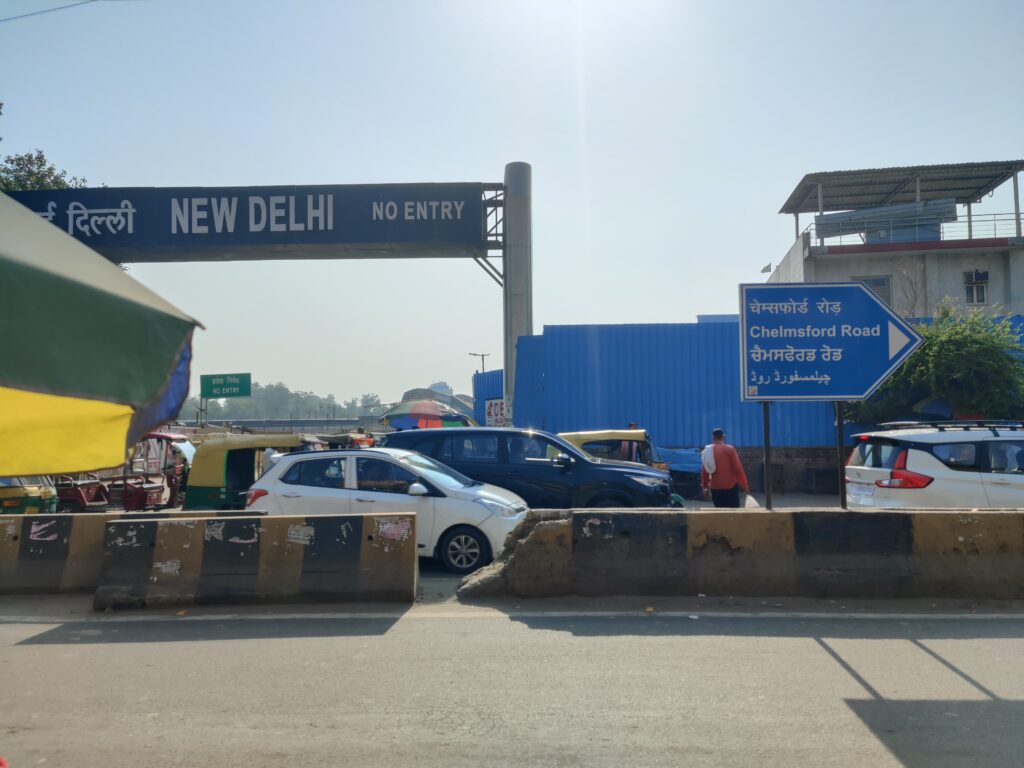
– **New Delhi Railway Station** — the most central and busiest
– **Hazrat Nizamuddin** — key for trains to South and East India
– **Old Delhi (Delhi Junction)** — important for trains to North India, Jammu, and Amritsar
– **Anand Vihar Terminal** — used for trains to Eastern UP and Bihar
– **Sarai Rohilla** — for trains to Rajasthan
– **Delhi Cantonment** — for limited services
Trains like the Rajdhani Express, Shatabdi Express, and Vande Bharat connect Delhi to major cities at high speed and in great comfort. Booking in advance via the IRCTC website or app is strongly recommended, especially during peak travel seasons.
By Road
Delhi is accessible by road from all directions via a network of national highways. The Delhi-Jaipur Expressway (NH 48), Yamuna Expressway to Agra (NH 19), and GT Road to Amritsar are among the key arteries.
**Luxury bus services** operated by Rajasthan Roadways, Haryana Roadways, UPSRTC, and numerous private operators connect Delhi to cities like Jaipur, Agra, Chandigarh, Haridwar, and Dehradun. Private AC sleeper buses and Volvo coaches make overnight journeys reasonably comfortable.
**By Car:** Delhi lies roughly 280 km from Jaipur (approx. 4–5 hours), 200 km from Agra (approx. 3–4 hours), and 250 km from Chandigarh (approx. 4–5 hours), making it an ideal base for Golden Triangle road trips.
Getting Around Delhi: Transportation Within the City
Once you arrive, navigating Delhi efficiently is key to making the most of your trip. Thankfully, Delhi offers an impressive range of transport options.
Delhi Metro
Without question, the Delhi Metro is the smartest way to travel across the city. Operated by the Delhi Metro Rail Corporation (DMRC), the network is big and cover all important parts of Delhi.
The Metro is clean, air-conditioned, punctual, and affordable. The Metro runs from approximately 6:00 AM to 11:00 PM.
Key lines for tourists:
– **Yellow Line** — connects Chandni Chowk, Rajiv Chowk (Connaught Place), and Hauz Khas
– **Violet Line** — reaches Lajpat Nagar and Kashmere Gate
– **Airport Express Line** — connects IGI Airport to New Delhi Station in under 20 minutes
Autorickshaws and Cycle Rickshaws
In Old Delhi especially, the narrow lanes that cars and metros cannot penetrate are best navigated by cycle rickshaw. These colorfully decorated three-wheelers are a quintessential Delhi experience. Always negotiate the fare before boarding, or insist on the meter for autorickshaws.
App-based autorickshaw services like **Ola Auto** and **Rapido** have made this mode of transport fairer and more predictable in pricing.
App-Based Cabs (Uber & Ola)
For door-to-door convenience, Uber and Ola operate extensively in Delhi-NCR. Pricing is metered and transparent. These are ideal for late nights, airport transfers, or reaching areas not well-served by the Metro.
DTC Buses
The Delhi Transport Corporation (DTC) runs an extensive bus network across the city. With the introduction of the low-floor AC bus fleet, long-distance intra-city journeys have become more comfortable. While the bus network is comprehensive, routes can be confusing for first-time visitors — the Delhi Metro is generally easier for tourists.
E-Rickshaws
E-rickshaws (battery-powered three-wheelers) have become ubiquitous for short-distance last-mile connectivity, particularly near Metro stations. They are cheap (₹10–₹20 per person on shared routes) and environmentally friendly.
How to Explore Delhi: A Practical Approach
Delhi can overwhelm even the most seasoned traveller. Here is a smart framework for exploring the city:
**Day 1 — Old Delhi: ** Start with Chandni Chowk, Jama Masjid, Red Fort, and Raj Ghat. Use a cycle rickshaw in the bazaar lanes. Try breakfast at a famous paratha or jalebi shop.
**Day 2 — Central & Imperial Delhi: ** Visit India Gate, Rashtrapati Bhavan, Humayun’s Tomb, Purana Qila, and Qutub Minar.
**Day 3 — South Delhi & Cultural Immersion: ** Hauz Khas Village, Lotus Temple, ISKCON Temple, and the National Museum.
**Day 4 — Shopping & Hidden Gems:** Explore Dilli Haat, Khan Market, Sarojini Nagar, Lajpat Nagar, and offbeat spots like Agrasen ki Baoli or Mehrauli Archaeological Park.
Always carry water, sunscreen, and a light scarf (useful for entering religious sites). English is widely understood in the tourist circuit, though some Hindi phrases go a long way.
Top Places to Visit in Delhi
1. Red Fort (Lal Qila)
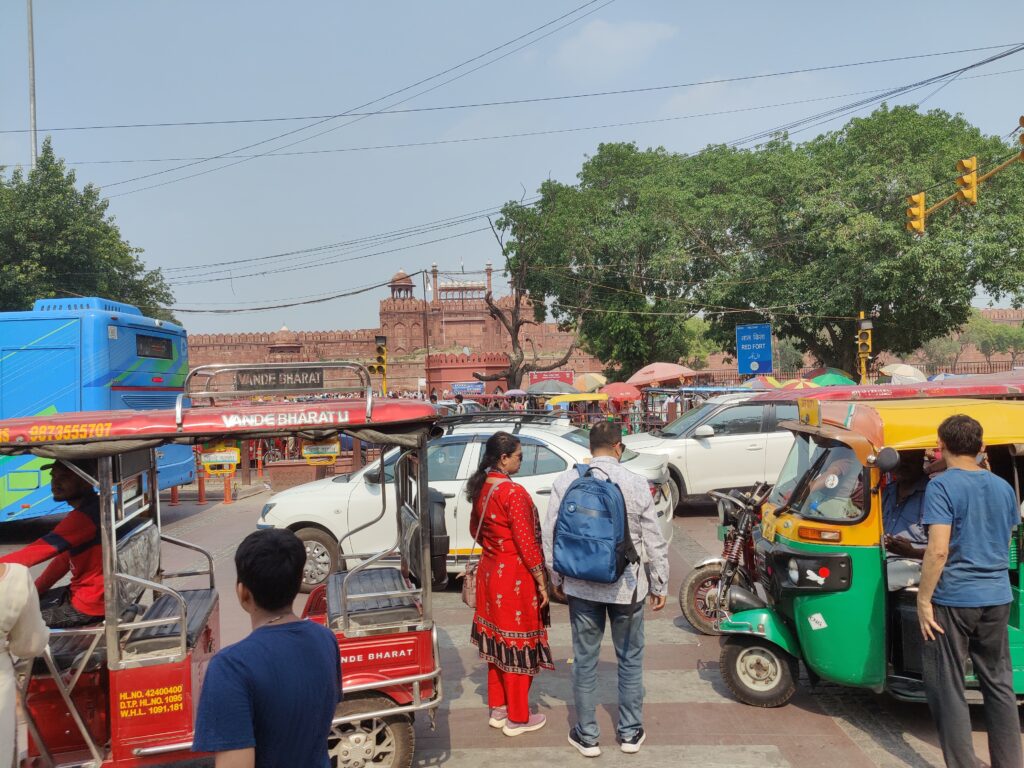
Standing as the most iconic symbol of Delhi, the Red Fort is a UNESCO World Heritage Site built by Mughal Emperor Shah Jahan between 1638 and 1648. Constructed in red sandstone — which gives the fort its name — this massive complex served as the main residence of Mughal emperors for nearly 200 years.
The fort’s Lahori Gate is the ceremonial main entrance. Inside, highlights include the **Diwan-i-Aam** (Hall of Public Audiences), **Diwan-i-Khas** (Hall of Private Audiences), the **Rang Mahal** (Palace of Colours), and the **Mumtaz Mahal** which now houses a museum. Every Independence Day (August 15), India’s Prime Minister addresses the nation from the ramparts here.
**Entry:** ₹35 for Indians, ₹550 for foreign nationals | **Timings: ** 9:30 AM – 4:30 PM (closed Mondays)
2. Qutub Minar
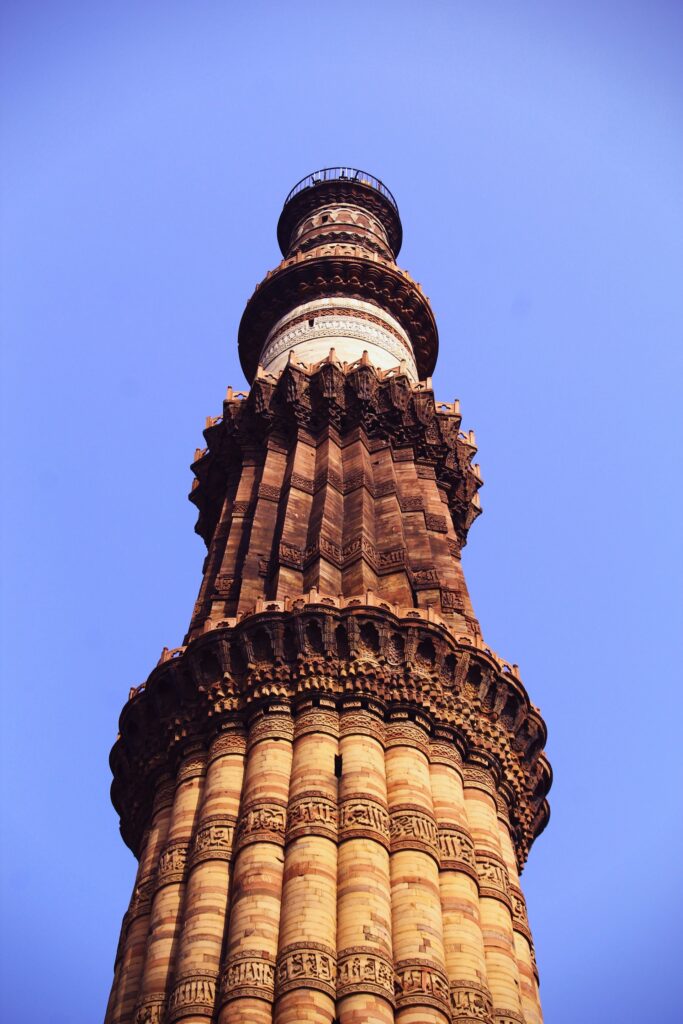
The Qutub Minar, another UNESCO World Heritage Site, is the tallest brick minaret in the world at 72.5 metres. Built in 1193 by Qutb ud-Din Aibak, the founder of the Delhi Sultanate, the minaret’s construction was continued by his successors. Made of red sandstone and marble, its five storeys are decorated with intricate carvings and verses from the Quran.
The **Qutub Complex** surrounding the minaret includes the Quwwat-ul-Islam Mosque (the first mosque built in India after the Islamic conquest), the Iron Pillar of Delhi (a marvel of ancient metallurgy that has not rusted in over 1,600 years), and the tomb of Iltutmish.
**Entry:** ₹35 for Indians, ₹550 for foreign nationals | **Best Time to Visit:** Early morning
3. Humayun’s Tomb
Built in 1565–1572 by the widow of Mughal Emperor Humayun, this garden tomb is a stunning precursor to the Taj Mahal and is credited with introducing the Charbagh (four-part garden) layout to the Indian subcontinent. A UNESCO World Heritage Site, its Persian-influenced architecture, double dome, and the serene symmetry of its gardens make it one of the most beautiful structures in Delhi.
The complex also contains the tombs of Isa Khan and other Mughal nobles. Evening light is particularly magical here.
**Entry:** ₹35 for Indians, ₹550 for foreign nationals | **Timings:** Sunrise to Sunset
4. India Gate
The India Gate is Delhi’s most recognizable landmark, a 42-metre tall war memorial erected in honour of the approximately 84,000 soldiers of British India who died in the First World War. Designed by Sir Edwin Lutyens, it stands at the eastern end of the ceremonial Kartavya Path (formerly Rajpath).
The **Eternal Flame (Amar Jawan Jyoti)** burned here for decades in memory of soldiers who died in the 1971 Indo-Pakistani War, though it was merged with the National War Memorial flame in 2022. The surrounding lawns are a popular evening destination for Delhiites, with street food stalls, ice cream vendors, and laser and water shows making it a family-friendly hangout.
**Entry:** Free | **Best Time to Visit:** Early morning or evening
5. Lotus Temple (Bahá’í House of Worship)
One of the most architecturally distinctive structures in all of Delhi, the Lotus Temple is a Bahá’í House of Worship completed in 1986. Designed by Iranian-Canadian architect Fariborz Sahba, its 27 free-standing marble-clad petals form the shape of an opening lotus. It has received more visitors than the Eiffel Tower and the Taj Mahal on several occasions.
Open to people of all faiths — or none — the interior is a serene meditation hall with no religious icons. The garden surrounding the temple is beautifully manicured and highly photogenic.
**Entry:** Free | **Timings:** 9:00 AM – 5:30 PM (closed Mondays)
6. Jama Masjid
The Jama Masjid is India’s largest mosque and one of the finest examples of Mughal religious architecture. Built by Emperor Shah Jahan between 1650 and 1656, it can accommodate up to 25,000 worshippers at prayer. The mosque’s courtyard, flanked by two 40-metre minarets and three gateways of red sandstone and white marble, is awe-inspiring.
Non-Muslims are welcome to visit outside prayer hours. Climbing one of the minarets offers a panoramic view of Old Delhi’s rooftops and the Red Fort. Dress modestly (coverings are provided at the gate for a small deposit).
**Entry:** Free (camera fee applies) | **Timings:** Open throughout the day except during prayer times
7. Akshardham Temple
Inaugurated in 2005, the Swaminarayan Akshardham is arguably India’s most spectacular modern temple complex. Built in just five years using 234 ornately carved pillars, 20,000 statues, and nearly 3,000 tonnes of Rajasthani sandstone assembled without steel — it holds a Guinness World Record as the world’s largest comprehensive Hindu temple.
The complex features an Abhishek Mandap (ritual hall), a boat ride through 10,000 years of Indian heritage, IMAX shows, musical fountains, and lush themed gardens. No photography is allowed inside; all electronic devices must be deposited at the entry.
**Entry:** Free for the temple; nominal charges for exhibitions | **Timings:** 9:30 AM – 6:30 PM (closed Mondays)
8. Hauz Khas Village
A delightful blend of medieval ruins and modern hipster culture, Hauz Khas Village (HKV) is one of Delhi’s most unique neighbourhoods. At its heart is the **Hauz Khas Reservoir**, built in the 13th century by Alauddin Khilji, surrounded by the ruins of a 14th-century madrasa and the tomb of Firoz Shah Tughlaq.
Today, the lanes around the ruins are lined with boutique clothing stores, art galleries, rooftop cafés, and quirky restaurants. It is especially lively in the evenings, particularly on weekends.
**Entry:** Free to the archaeological area | **Best Time to Visit:** Late afternoon and evening
9. Purana Qila (Old Fort)
One of Delhi’s oldest structures, Purana Qila is believed to occupy the site of Indraprastha, the legendary capital of the Pandavas from the Mahabharata. As it stands today, it was substantially built by Sher Shah Suri in the 16th century. The Qila-i-Kuhna Mosque and the Sher Mandal (a two-storey octagonal tower) inside the complex are architecturally outstanding.
A lovely boating lake sits outside the fort walls, and the fort is also the venue of a popular **Sound and Light Show** on summer evenings.
10. Raj Ghat
This serene, minimalist memorial marks the cremation site of Mahatma Gandhi, India’s Father of the Nation, who was assassinated in 1948. A simple black marble platform set in a beautifully manicured garden, Raj Ghat radiates quiet gravitas. The eternal flame beside the platform was lit by Jawaharlal Nehru on Gandhi’s cremation day.
Nearby memorials honour Jawaharlal Nehru (Shanti Van), Indira Gandhi (Shakti Sthal), Rajiv Gandhi (Vir Bhumi), and other Indian leaders.
**Entry:** Free | **Best Time to Visit:** Early morning
Famous Markets in Delhi
Chandni Chowk
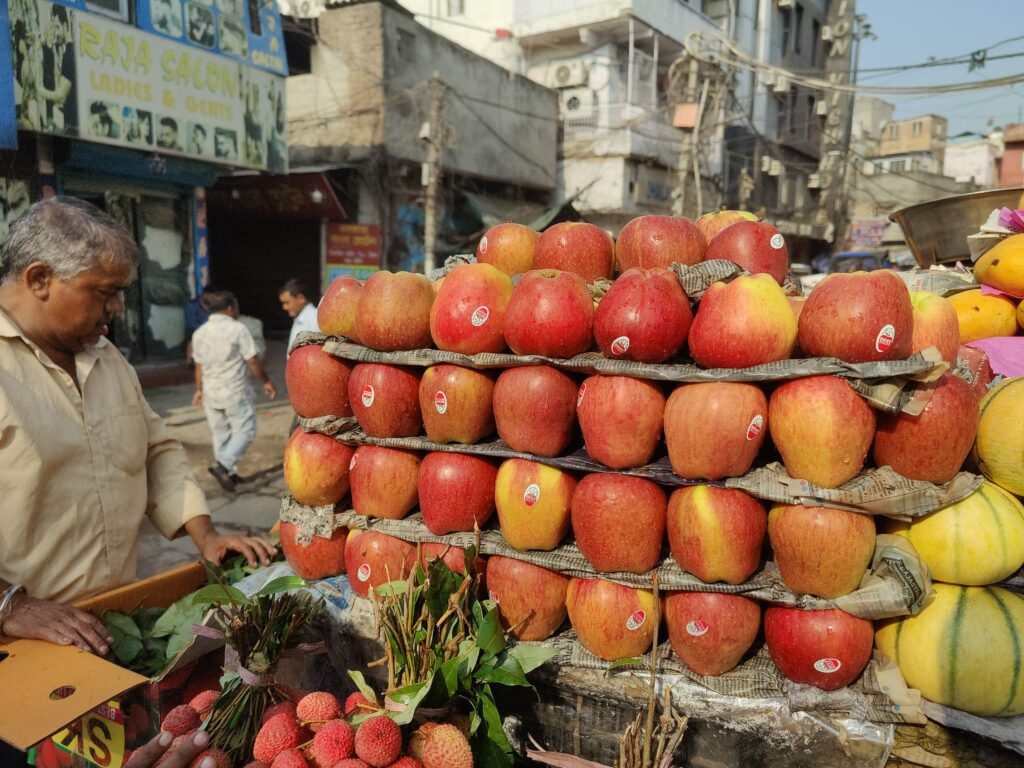
No visit to Delhi is complete without plunging into Chandni Chowk, one of Asia’s oldest and most densely packed markets. Built in the 17th century by Emperor Shah Jahan, this labyrinthine bazaar radiates outward from the Red Fort into a web of specialized lanes and gullies.
Each lane has a specialty: **Dariba Kalan** for silver and gold jewellery, **Kinari Bazaar** for wedding trimmings and ribbons, **Khari Baoli** — Asia’s largest wholesale spice market, whose aromas alone are an experience — **Nai Sarak** for books and stationery, and **Chawri Bazaar** for wholesale hardware and paper.
Visit on foot or by cycle rickshaw. Arrive early (before 10 AM) to avoid the peak-hour rush.
Sarojini Nagar Market
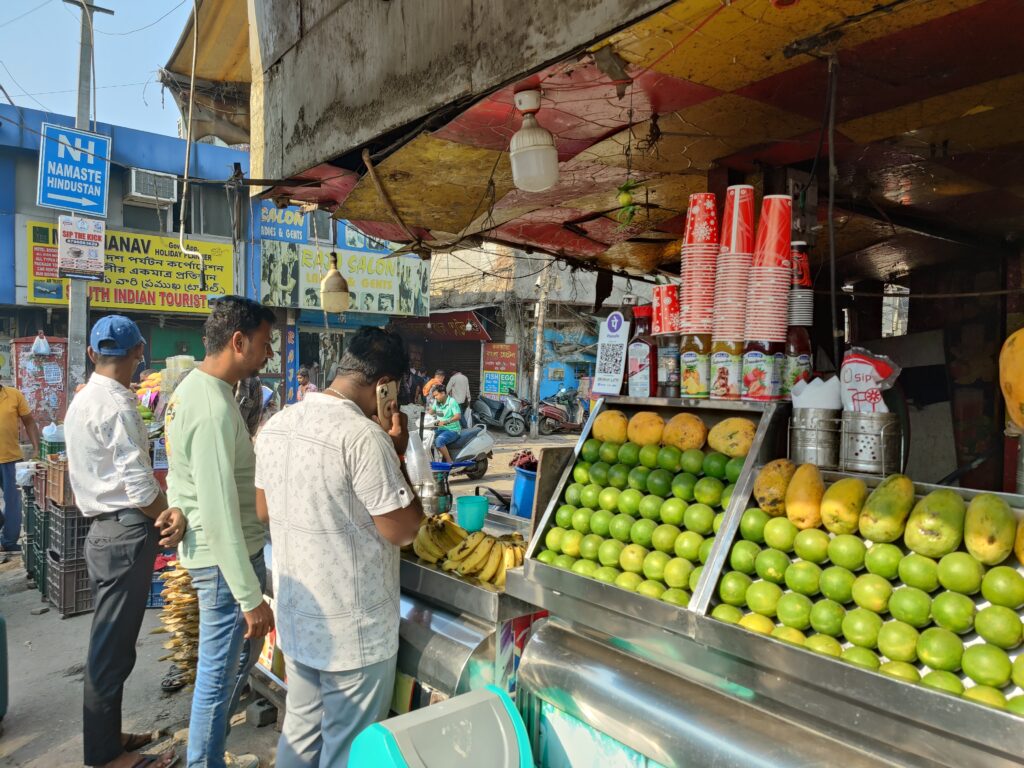
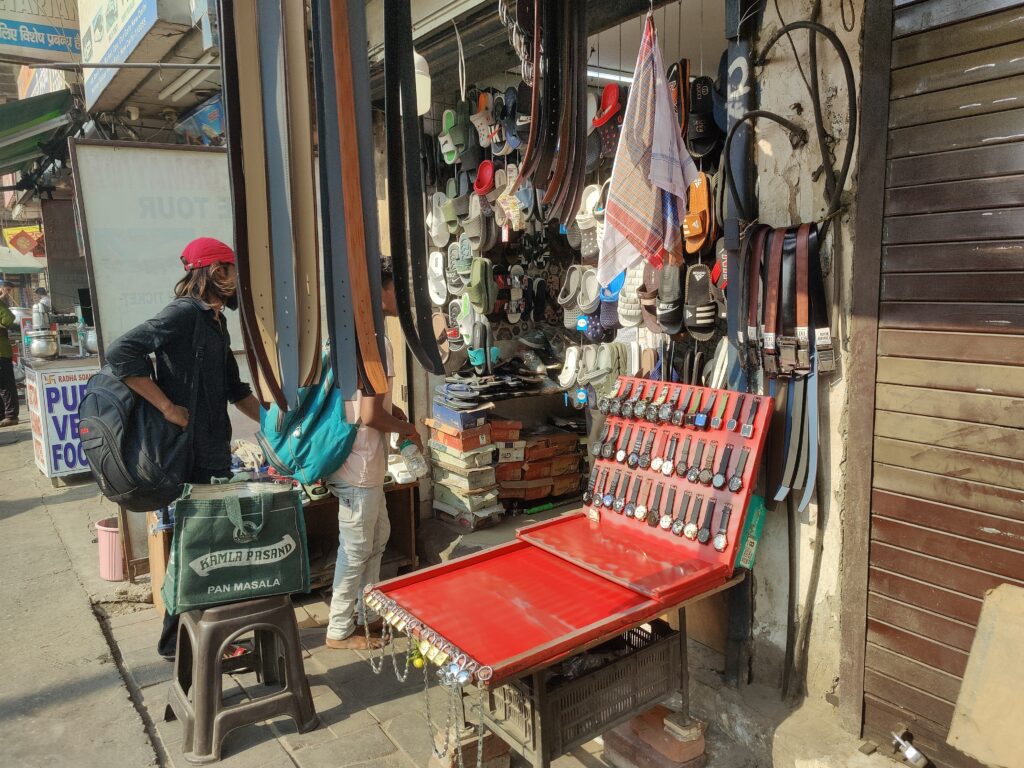
Known to locals simply as “Sarojini,” this sprawling outdoor market in South Delhi is the go-to destination for budget fashion. Branded export surplus clothing — shirts, dresses, denims, kurtis, and more — is sold at a fraction of its original price. Bargaining is mandatory and expected.
It gets intensely crowded on weekends; weekday mornings offer a more relaxed browsing experience.
### Lajpat Nagar Central Market
One of Delhi’s most popular middle-class markets, Lajpat Nagar is particularly famous for ethnic wear, fabrics, home furnishings, and an excellent variety of street food. The market is well-organized by sections and is easily accessible by Metro.
Khan Market
Consistently ranked among the most expensive retail markets in Asia, Khan Market in Lutyens’ Delhi is the haunt of Delhi’s elite, diplomats, and expats. Boutique bookstores (Bahrisons, Full Circle), gourmet grocery stores, premium restaurants, and international brands line its charming corridors. Perfect for book lovers and café-hoppers.
Dilli Haat
A government-run open-art and crafts bazaar, Dilli Haat (there are branches in INA, Pitampura, and Janakpuri) is one of the best places to buy authentic Indian handicrafts directly from artisans. Craftspeople from different states rotate in periods, showcasing pottery, weaving, woodwork, embroidery, and more. A food court serves regional cuisine from across India’s states.
**Entry:** ₹30 for adults
Janpath Market
Located near Connaught Place, Janpath is an affordable outdoor market ideal for souvenirs, tibetan jewellery, junk accessories, cotton clothes, and Rajasthani handicrafts. Prices are low and bargaining is the norm. It is easily combined with a visit to Connaught Place.
Hidden Gems in Delhi
Agrasen ki Baoli
In the heart of Connaught Place, tucked between glass office towers and luxury hotels, lies Agrasen ki Baoli — a 60-step ancient stepwell of mysterious origin. Dating possibly to the 14th century, this 103-metre long, 15-metre wide stepwell descends into an almost supernatural stillness. It is one of Delhi’s most photogenic and least-crowded heritage sites despite being listed as a protected monument by the Archaeological Survey of India.
Best visited on weekday mornings when it is virtually empty.
Mehrauli Archaeological Park
Most tourists visit the Qutub Minar and leave. But behind the Qutub Complex lies the 100-acre Mehrauli Archaeological Park — an extraordinary open-air museum containing over 70 historically significant monuments, ranging from Mughal-era mosques and tombs to British-era structures. Few visitors ever explore it. Walking through on a quiet morning is like stepping into a forgotten world.
Lodi Garden
Spanning 90 acres in the heart of South Delhi, Lodi Garden is one of the city’s most beloved green spaces. But beyond being a jogger’s paradise, it contains some remarkable 15th-century tombs of the Sayyid and Lodi dynasty rulers. Mohammed Shah’s Tomb, Sikander Lodi’s Tomb, and the Bara Gumbad and Shish Gumbad are architectural gems set among manicured lawns frequented by migratory birds.
Nicholas Roerich Museum (Naggar)
In Vasant Vihar, the small Nicholas Roerich Museum — a villa that once belonged to the Russian painter — houses an evocative collection of his Himalayan and Indian works. Often overlooked, it is a tranquil, reflective space in a residential neighbourhood.
Feroz Shah Kotla (Aravalli Biodiversity Park)
Feroz Shah Kotla, the 14th-century citadel of Firoz Shah Tughlaq, contains a polished sandstone Ashokan Pillar brought here in the 3rd century BC. Beyond its historical significance, it is also the only place in Delhi where locals leave offerings for **Djinns (Jinns)** — spirits believed to inhabit the ruins. This ritualistic Thursday gathering is one of Delhi’s most fascinating and little-known living traditions.
Hauz-i-Shamsi & Balban’s Tomb
Near Mehrauli, the rarely visited ruins of the Hauz-i-Shamsi reservoir (built by Iltutmish in 1231) and the tomb of Sultan Ghiyasuddin Balban — which contains what scholars believe is the first true arch in Indo-Islamic architecture — are remarkable finds for the curious traveller.
Famous Food Joints in Delhi: A Culinary Tour
Delhi’s food scene is nothing short of extraordinary. From centuries-old street food stalls to award-winning modern restaurants, the city feeds you generously at every turn.
Karim’s, Jama Masjid
Established in 1913, Karim’s is arguably the most famous restaurant in Old Delhi and one of India’s great culinary institutions. Located in a narrow lane near the Jama Masjid, it specialises in Mughlai cuisine. The **Nihari** (slow-cooked lamb stew), **Burra Kebab** (marinated lamb chops), **Seekh Kebab**, and **Mutton Korma** are legendary. Breakfast here — Paya (trotters) soup with naan — is a rite of passage.
Paranthe Wali Gali, Chandni Chowk
This narrow lane in Chandni Chowk has been serving stuffed parathas (flatbreads) since the 19th century. Several family-run shops here offer parathas stuffed with potato, paneer, dal, banana, coconut, and even rabri (sweetened condensed milk). Served with pickle, curd, and chutney, it is a hearty, quintessentially Delhi breakfast.
Jalebi Wala (Old Famous Jalebi Wala), Chandni Chowk
Since 1884, this tiny shop near Fatehpuri Masjid has been serving jalebis — crisp, golden, syrup-soaked spirals of deep-fried batter — alongside rabri. The jalebis are made fresh, straight into the kadhai, and served piping hot. It is a masterclass in simplicity.
Al Jawahar, Jama Masjid Area
Another Old Delhi institution just steps from Karim’s, Al Jawahar has been serving Mughlai food since 1947. Its **Chicken Changezi**, **Mutton Rogan Josh**, and **Daal Makhani** are deeply satisfying. The no-frills ambiance is part of its charm.
Saravana Bhavan, Connaught Place
For South Indian food, Saravana Bhavan — a global chain but utterly reliable — serves outstanding **Masala Dosa**, **Idli Sambhar**, **Vada**, and **Uttapam** at great prices. The Connaught Place branch is central and consistent.
Nizam’s, Khan Market / Connaught Place
Nizam’s is Delhi’s definitive address for the **Kathi Roll** — a Kolkata-origin street food of spiced kebab and egg wrapped in a flaky paratha. Crispy, smoky, and utterly addictive.
Natraj Dahi Bhalle Wala, Chandni Chowk
Since 1940, this stall has served what many consider Delhi’s finest **Dahi Bhalle** — soft, spongy lentil dumplings submerged in chilled yogurt and crowned with tamarind chutney, mint chutney, sev, and spices. A masterpiece of Delhi street food.
Bukhara, ITC Maurya Hotel
If budget permits, Bukhara is one of India’s most celebrated fine-dining restaurants, serving North-West Frontier (Peshwari) cuisine in a rustic, wood-and-stone setting. The **Dal Bukhara** (slow-cooked black lentils, simmered for 18 hours), **Sikandari Raan** (whole roasted leg of lamb), and tandoor-roasted meats are extraordinary. Former US Presidents and global royalty have dined here.
Connaught Place Street Food Circuit
The lanes radiating off CP’s outer circle are lined with stalls serving **Chaat** (tangy, sweet, spicy snack assortments), **Gol Gappe** (pani puri), **Bhel Puri**, and **Aloo Tikki**. A street food walk here costs almost nothing and delivers maximum flavour.
Pandara Road Market
This cluster of restaurants in central Delhi is the city’s go-to destination for late-night dining. Restaurants like **Gulati**, **Pindi**, and **Sona Rupa** serve outstanding North Indian curries, butter chicken, dal makhani, and roomali roti well past midnight.
Best Time to Visit Delhi
Delhi’s climate is extreme: scorching summers, humid monsoons, and chilly winters. Timing your visit carefully makes an enormous difference to your experience.
October to March — The Ideal Season
This is unequivocally the best time to visit Delhi. Temperatures are pleasant, ranging from around 8°C (nights in January) to 25°C (afternoons in March). The air is cleaner (relatively), outdoor sightseeing is comfortable, and the city’s events calendar is packed.
– **October–November:** Post-monsoon freshness. Festivals like Dussehra and Diwali light up the city. Gardens are green and vibrant.
– **December–January:** Peak tourist season. Foggy winter mornings add a romantic quality to Old Delhi. Christmas and New Year celebrations around Connaught Place are festive. Carry warm layers for evenings.
– **February–March:** Temperatures begin to rise but remain comfortable. The Surajkund Crafts Mela (in nearby Faridabad) is held in February — a spectacular showcase of Indian folk art and handicrafts. Holi (March) fills Delhi with colour and joy.
April to June — The Hot Season (Caution Advised)
Temperatures escalate sharply, regularly touching 42–47°C between May and June. Heat waves are common. If you must visit during this period, plan outdoor sightseeing for early morning (before 9 AM) and late afternoon (after 4 PM). Hydrate constantly.
The upside: lower hotel rates and shorter queues at monuments.
July to September — Monsoon Season
The monsoons bring relief from the heat but also significant flooding in low-lying areas, traffic disruption, and high humidity. Delhi receives an average of 650 mm of annual rainfall, most of it in July–August. While the greenery is gorgeous after the rains, this is generally not recommended for tourism unless you enjoy the dramatic atmosphere and lower prices.
**Pro tip:** If you are visiting during the peak season (October–February), book flights and hotels well in advance, especially around Diwali and the Christmas–New Year window.
—
## Museums and Cultural Spaces Not to Miss
### National Museum, Janpath
The National Museum is India’s largest and most comprehensive museum, housing over 200,000 works of art spanning more than 5,000 years of Indian history and civilization. Its collection includes ancient Indus Valley artefacts, Mauryan sculptures, Mughal miniature paintings, Buddhist art, textiles, arms and armour, and prehistoric tools. The Harappan Gallery alone is worth an extended visit. Allow at least three to four hours to do it justice.
**Entry:** ₹20 for Indians, ₹650 for foreign nationals | **Timings:** 10:00 AM – 6:00 PM (closed Mondays)
### National Gallery of Modern Art (NGMA)
Housed in the former Jaipur House near India Gate, the NGMA showcases Indian modern and contemporary art from the 1850s onwards. Works by Raja Ravi Varma, Amrita Sher-Gil, and more recent Indian masters fill its galleries. The architecture of the building itself is gracious and colonially elegant.
Crafts Museum (National Crafts Museum & Hastkala Academy)
Located near Bhairon Road in the Old Fort area, this is one of Delhi’s most underrated institutions. Spread across 6.5 acres, the museum brings together folk and tribal arts from across India — terracotta, metalwork, textiles, woodcarving, and more. A village complex on the grounds recreates rural architectural styles from different Indian regions, and artisans sometimes work on-site.
Indira Gandhi Memorial Museum
Located in the residence where India’s Prime Minister Indira Gandhi was assassinated in 1984, this small museum tells the story of her remarkable and turbulent political life through photographs, personal belongings, documents, and the preserved garden path where she was shot. Moving, thoughtful, and highly recommended.
Dilli Haat and the Regional Cuisine Experience
Beyond its crafts, Dilli Haat’s food court is a magnificent tour of India’s regional cuisines in a single courtyard. Stalls from Manipur, Kerala, Rajasthan, Gujarat, Karnataka, and over a dozen other states offer authentic dishes you would typically have to travel thousands of kilometres to taste. It is the best value-for-money culinary tour of India you will find anywhere.
Spiritual Delhi: Temples, Mosques, Gurudwaras & More
Delhi is a deeply spiritual city, and its places of worship are not just architectural marvels but living, breathing centres of faith and community.
Gurudwara Bangla Sahib
One of the most prominent Sikh shrines in Delhi, Gurudwara Bangla Sahib was originally a bungalow belonging to Raja Jai Singh and was visited by the eighth Sikh Guru, Guru Har Krishan, in 1664. The gurudwara’s serene sarovar (sacred pool) gleams gold, and the atmosphere of quiet devotion is profound regardless of your faith. The Langar (free community kitchen) serves thousands of visitors daily — sitting in the langar hall and sharing a meal with strangers from all walks of life is a quintessentially Sikh experience of radical equality.
**Entry:** Free | Open 24 hours , but dress modestly and cover your head.
ISKCON Temple, East of Kailash
Delhi’s ISKCON Temple (International Society for Krishna Consciousness) is a grand complex dedicated to Sri Sri Radha Parthasarathi. Opened in 1998, it incorporates five shrines, spiritual exhibitions, a multimedia show on the life of Krishna, and a vegetarian restaurant. The Janmashtami (Krishna’s birthday) celebrations here are spectacular.
Nizamuddin Dargah
The dargah (shrine) of Hazrat Nizamuddin Auliya, a revered 13th-century Sufi saint, is one of Delhi’s most spiritually powerful spaces. Located in the Nizamuddin neighbourhood, the shrine draws devotees of all faiths daily. The **Qawwali** (Sufi devotional music) sessions held after the evening prayers on Thursdays, performed by hereditary musicians, are among the most moving musical experiences in India. The air smells of rose petals, agarbatti, and faith.
Entry is free, but dress modestly and cover your head.
Quick Tips for Visiting Delhi
**Stay Safe:** Delhi is generally safe for tourists but exercise the usual urban caution. Avoid isolated areas at night and be wary of unsolicited tour guides near monuments.
**Dress Code:** Carry a light scarf or shawl for visiting religious sites. Mosques, Sikh Gurudwaras, and Hindu temples may require covered heads and shoulders. Shoes must be removed at most religious sites.
**Cash and Cards:** Most hotels, restaurants, and shops accept cards and UPI (QR code payment). However, carry some cash (₹500 and ₹100 notes) for street food, autorickshaws, and smaller bazaars.
**Language:** Hindi and English are both widely spoken in Delhi’s tourist circuit. A few basic Hindi phrases (“Kitna hai?” = How much is this? | “Dhanyavaad” = Thank you | “Kahan hai?” = Where is it?) will earn you smiles.
**Stay Hydrated:** Delhi’s heat and air quality make hydration critical. Stick to sealed bottled water. Avoid ice in drinks from street stalls.
**Pollution:** Delhi’s air quality can be poor, especially in November–January due to crop burning, Diwali firecrackers, and weather patterns. Check the AQI (Air Quality Index) and carry an N95 mask for severely polluted days.
**Connectivity:** SIM cards with data (Airtel, Jio, Vi) are easily available at the airport and throughout the city, requiring only your passport for registration. Internet is fast and affordable.
## Day Trips from Delhi: Making the Most of Your Visit
Delhi is the ideal base for some of India’s greatest day trips:
– **Agra (200 km, ~3 hours):** Home to the Taj Mahal, Agra Fort, and Fatehpur Sikri. Take an early morning train or cab; arrive before 8 AM to see the Taj in golden light.
– **Jaipur (280 km, ~4 hours):** The Pink City, with Amber Fort, City Palace, Hawa Mahal, and the world-class Jantar Mantar observatory.
– **Vrindavan & Mathura (150 km, ~2.5 hours):** Sacred cities associated with Lord Krishna. Spectacular during Holi.
– **Neemrana Fort (120 km, ~2 hours):** A stunning 15th-century fort-palace converted into a heritage hotel, ideal for a luxury day trip.
– **Rishikesh & Haridwar (250 km, ~5 hours):** For yoga, Ganga Aarti, white-water rafting, and spiritual immersion.
## Accommodation in Delhi: Where to Stay
Delhi offers accommodation across every budget:
**Luxury:** The Oberoi New Delhi, The Leela Palace, ITC Maurya, The Imperial (Connaught Place), and the Taj Mahal Hotel (Mansingh Road) set the gold standard for Indian hospitality.
**Mid-Range:** The Park Hotel (Connaught Place), Bloomrooms, Devna Delhi, and numerous three-star options near South Extension and Greater Kailash offer excellent value.
**Budget:** Paharganj (near New Delhi Railway Station) is the backpacker district with hundreds of guesthouses. Karol Bagh also offers good mid-budget options. For budget travellers, Zostel Delhi and The Moustache Hostel are highly rated.
**Best Areas to Stay:** For first-time visitors, staying around **Connaught Place** or **South Delhi (Khan Market, Saket, Hauz Khas)** offers central access to most attractions and excellent dining options.
Conclusion
Delhi is not a city that you can fully explore in just one visit. Every time you come back, you find something new to see and experience. The city is full of history, culture, busy markets, beautiful buildings, and delicious food.
You can visit famous places like the Red Fort, Qutub Minar, and Lotus Temple. Walk through the busy streets of Chandni Chowk or relax at Hauz Khas Village. Enjoy tasty food, from kebabs at Karim’s to dal at Bukhara.
The best time to visit Delhi is from October to March. Use the Metro to travel around the city easily. Shop in local markets and don’t be afraid to try different foods. Take your time exploring, even beyond the popular tourist spots.
Delhi slowly reveals its beauty and charm. The more time you spend here, the more you will enjoy and understand this amazing city.